
Herzing Nursing Programs
As healthcare changes, so does the need for educated, skilled nurses. Herzing University recognizes the critical role that nurses play, and we have expanded our nursing programs to give you more choices and ways to earn your nursing degree.

PN
Diploma in Practical Nursing
Earn your Practical Nursing Diploma in as few as 12 months and develop the skills and confidence to begin your nursing career.

ASN
Associate in Nursing
Start your path to an entry-level nursing career in as few as 20 months through our associate degree in nursing program.

BSN
Bachelor of Science in Nursing
Explore our several BSN pathways, including unique options for practicing nurses, current healthcare professionals, and those new to nursing.

MSN
Master of Science in Nursing
Advance your nursing practice on your schedule and meet the growing demand for highly skilled nursing professionals. Choose between multiple specializations that align with your career goals.

PMC
Post-Master's Certificates
Build upon your clinical expertise and become academically eligible for certification in another specialty through our online post-master’s nursing certificate programs.

DNE, DNP
Doctorate in Nursing Programs
Choose your educational pathway to a doctoral degree in nursing. Achieve new career heights in advanced practice or nursing education.
Locations
Online & on-campus options
Herzing University nursing programs are available online and at several ground campus locations, each offering extensive student resources and support as you pursue your nursing degree. Program availability varies by campus location and state eligibility.
Herzing University - Atlanta
Nursing programs
Palisades Office Park, Building B, 5th Floor
5901 Peachtree Dunwoody Road NE, Sandy Springs, GA 30328
Herzing University - Birmingham
Nursing programs
280 West Valley Avenue
Birmingham, AL 35209
Herzing University - Brookfield
Nursing programs
15895 W. Bluemound Road
Brookfield, WI 53005
Herzing University - Nashville
Nursing programs
100 Centerview Dr., Suite 100
Nashville, TN 37214
Herzing University - New Orleans
Nursing programs
3900 North Causeway Blvd Suite 800
Metairie, LA 70002

We are proud to have awarded
in scholarships and grants to nursing students in 2025
An affordable, career-focused education is possible with Herzing University.
Waived Enrollment Fee
Discover the educational pathway designed to maximize your career potential. Reach for greater heights with Herzing University.


Recognized for Excellence
Whether you are new to nursing or want to further your career with an advanced degree, Herzing offers program options as well as support teams to help you succeed.
Choose from diploma, undergraduate and graduate nursing degrees to prepare you for success and provide you with a path for every stage of your nursing career.
If you've ever imagined becoming a nurse or going further with your nursing career, you can.
Accreditation1 acknowledges that Herzing's nursing programs meet specific national standards. Accreditation is important for individuals who may want to further their education, as most post-grad programs require a degree from an accredited program.
Fast Track to MSN - DUAL CREDIT
Qualifying students may be eligible to complete up to four graduate-level courses as part of their BSN or RN to BSN program plan at Herzing University. We offer multiple specialty tracks in our MSN program:
- Adult Gerontology Acute Care Nurse Practitioner (AGACNP) Programs
- Adult Gerontology Primary Care Nurse Practitioner (AGPCNP) Programs
- Family Nurse Practitioner (FNP) Programs
- Pediatric Nurse Practitioner (PNP) Programs
- Psychiatric Mental Health Nurse Practitioner (PMHNP) Programs
- Women's Health Nurse Practitioner (WHNP) Programs
- Public Health Programs
- Nursing Education Programs
- Nursing Informatics Programs
- Nursing Leadership & Administration Programs
- Dual MSN-NLA/MBA Degree Pathway
The Student Experience at Herzing
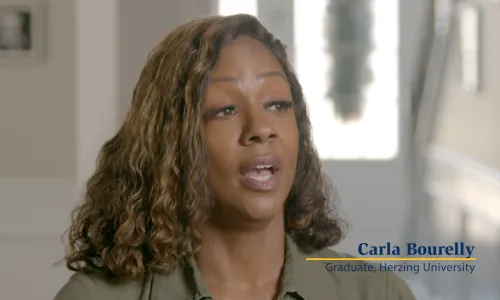
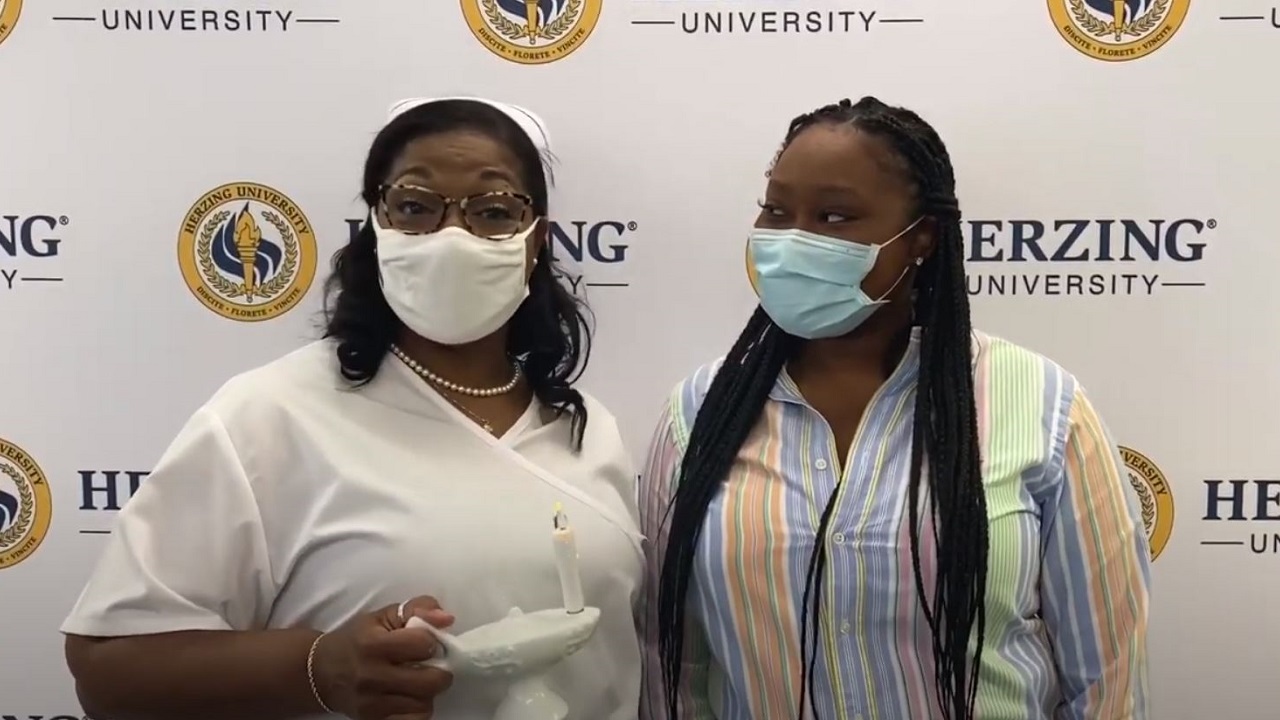
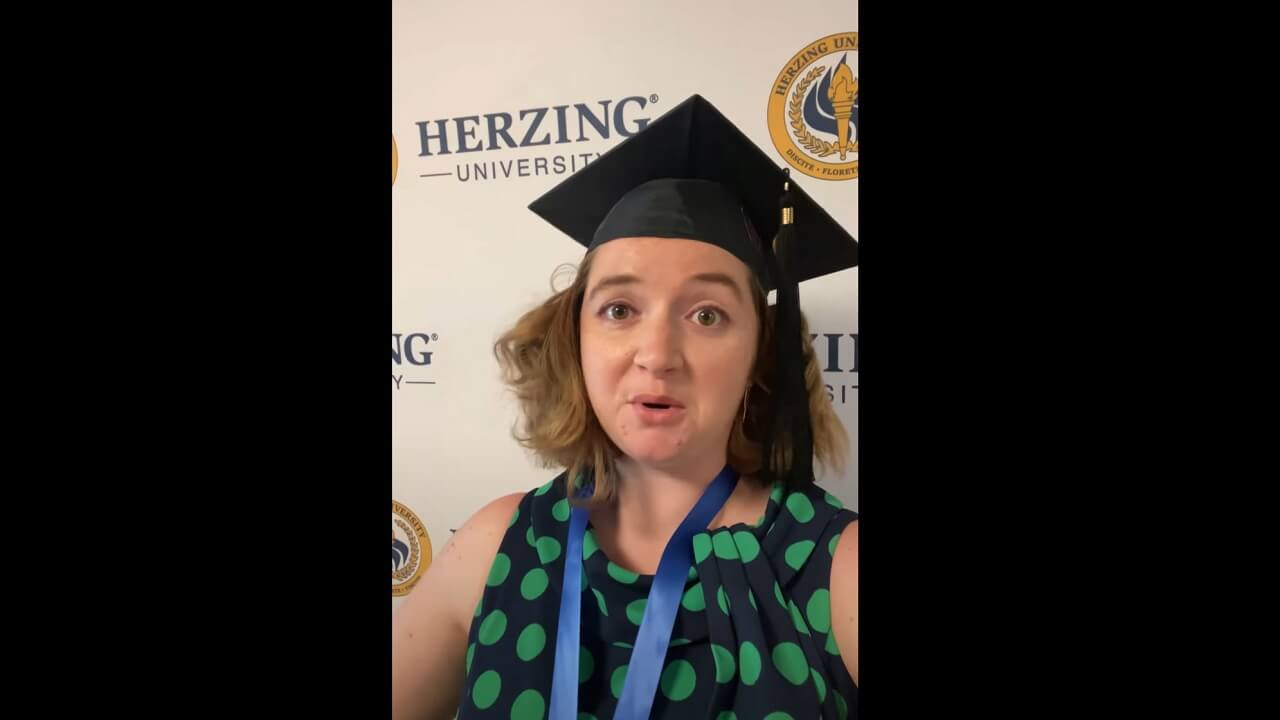
At Herzing, I had completed three medical-surgery clinicals, so now I feel like I know what I’m doing on the floor thanks to that experience. The adjustment wasn’t too hard for me, and I’m enjoying applying what I learned in school to real-life situations.

Asi Ituen
Nursing Alumni | Atlanta CampusI had a great experience with my clinicals and practicum, and that was partly because my nurse managers and charge nurses already had a positive attitude toward Herzing from their work with previous students. It was nice knowing that they respected me, and getting to know the nurses you work with can give you an advantage when job searching.

Jordan Sharon
Nursing Alumni | Orlando CampusI liked the small class sizes at Herzing and the fact that the instructors really got to know the students. They would make themselves available whenever we needed help, and I still talk to many of them now.

Samantha Sprasky
Nursing Alumni | Kenosha CampusGoing back to school after nearly a decade was challenging. But the support I received from my family as well as the Herzing community made the experience enjoyable and valuable. I felt myself grow as a person because I had challenged myself.

Laura Wolter
Healthcare Alumni | Minneapolis CampusAs a woman, I can see how underestimated and underrated we are within the IT industry. One of my professors was very candid with me about it. He pushed me to excel and learn as much as I could. The foundational challenge for us is how overlooked we are and how we must keep proving ourselves regarding Information Technology.

Sharee A. Smith
Technology Alumni | Minneapolis CampusFrequently Asked Questions
Didn't find the answer to your question? Send us an inquiry and we will be happy to answer all your questions!
Accreditation varies by nursing degree program and the Herzing campus where it is offered.
The baccalaureate degree program in nursing at Herzing University Atlanta, Brookfield, Clarksville, Kenosha, Madison, Minneapolis, Nashville, New Orleans, and Orlando are accredited by the Commission on Collegiate Nursing Education (http://www.ccneaccreditation.org). This accreditation includes the baccalaureate degree program offered at the satellite Herzing University Tampa location.
The master’s degree program in nursing, Doctor of Nursing Practice (DNP), and post-graduate APRN certificate programs at Herzing University Madison are accredited by the Commission on Collegiate Nursing Education (http://www.ccneaccreditation.org).
Herzing University is approved to offer programs in an online learning modality through association with the main campus in Madison, Wisconsin.
For more information about accreditation, please check out our nursing programs to discover the program that interests you!
Herzing University is dedicated to providing you with affordable, quality education to help you complete your degree in nursing.
The cost of our nursing programs varies by degree, location and program. More information and an estimate for the cost of your education can be found on our Herzing Tuition Wizard.
Students attending Herzing may be eligible for a combination of grants, scholarships, and student employment to make tuition as affordable as possible. You might also be eligible to qualify for federal financial aid or military benefits and services. Contact us directly for more information.
General requirements for our ASN, BSN, MSN, and DNP degrees vary across degree programs.
Requirements to enroll in undergraduate degree programs (ASN/ADN, BSN) include a high school diploma or equivalent and a minimum GPA requirement.
Most programs also require an interview with a Herzing admissions advisor before acceptance. Conditional admission may also be available for interested students who are waiting to take the National Council Licensing Exam (NCLEX).
For specific requirements, choose the program at the campus location that you are most interested in, or get in contact with a local admissions advisor.
Herzing University has 13 ground campuses across the United States and an online division. The campus locations below all offer on-campus programs, which vary by degree level:
All nursing courses are a combination of General Education requirements, core classes, electives, and clinicals. Some core classes have prerequisites which need to be fulfilled before the course is completed. The exact curriculum and requirements vary by program.
Yes, you can earn a nursing degree online, and we do our best to support working adults in our nursing programs—but keep in mind none of our nursing programs may be completed entirely online.
Here’s why: real experience in the field is critical to your success as a nurse. Your clinical experience is vital to becoming qualified for the job and excel immediately in your new career.
Many classes may be completed online, such as in our online ASN, BSN, and MSN Direct Entry programs, but it is your hands-on clinicals that will provide you with the best experience to prepare you for your career in nursing. Herzing University provides you with the best of both worlds.
Contact us to determine the program or course of study that will work best for you!
Yes! Herzing offers an accelerated Bachelor of Science in Nursing (ABSN) degree option at several campus locations. You could complete your degree in as few as 20 months. Upon graduation, you will be prepared for the National Council Licensure Exam for Registered Nurses (NCLEX-RN).
For more specifics about our unique campus programs, check out our accredited ABSN program, offered at these campus locations:
- Atlanta, Georgia
- Brookfield, Wisconsin
- Clarksville, Tennessee
- Kenosha, Wisconsin
- Madison, Wisconsin
- Minneapolis, Minnesota
- Nashville, Tennessee
- New Orleans, Louisiana
- Orlando, Florida
- Tampa, Florida
As an alternative, you may consider our online MSN Direct Entry program, designed for those who hold a non-nursing bachelor’s degree. You can potentially earn a master’s degree in nursing in as few as 20 months.
Herzing University is dedicated to YOU. Here at Herzing, we are career-focused, convenient and caring. Our specialized nursing programs were designed to help you achieve the career that you want in nursing at an affordable price.
Herzing offers diploma, undergraduate and graduate nursing degrees across 9 states at 12 different campuses and our online program, so you can choose the program and location.
But don’t take our word for it! Hear from current and graduated students who agree that Herzing helped them attain their educational and career goals.
We have a variety of start dates throughout the year. Check out your program of interest to find out how soon you can get started.
You can also take a look at our undergraduate admissions process, contact an admissions advisor or apply today!
Disclosures & Resources
Not all programs are offered at all campuses.
1. The baccalaureate degree program in nursing at Herzing University Atlanta, Brookfield, Clarksville, Kenosha, Madison, Minneapolis, Nashville, New Orleans, and Orlando are accredited by the Commission on Collegiate Nursing Education (http://www.ccneaccreditation.org). This accreditation includes the baccalaureate degree program offered at the satellite Herzing University Tampa location.
The doctor of nursing practice program, master's degree program in nursing, and post-graduate APRN certificate program at Herzing University - Madison are accredited by the Commission on Collegiate Nursing Education (http://www.ccneaccreditation.org).
Herzing University is approved to offer programs in an online learning modality through association with the main campus in Madison, Wisconsin.
View Accreditation and Approvals
Student Handbooks
Waived Enrollment Fee
Discover the educational pathway designed to maximize your career potential. Reach for greater heights with Herzing University.