
Program availability
Your Preferences
Update your Zip code, preferred campus, and preferred program

15 Essential Skills You Need to Succeed as a Social Worker
Are you considering a career as a social worker? Learn about the clinical and interpersonal skills you need to master to pursue a profession in social work.
Social work is a demanding and rewarding profession that requires a variety of skills and traits. That’s because social workers help people improve their well-being in many ways, through counseling, education and advocacy. They also assist people with mental health, substance abuse and socio-economic challenges, such as unemployment. Different types of social workers must exhibit unique skills to succeed in their work.
Social workers must possess certain skills, which can be broken down into two categories: clinical and interpersonal skills.
Interpersonal Skills
Interpersonal skills allow social workers to meet their clients on a personal level while developing the core competencies needed to provide effective treatment plans. Skills such as communicative practices, cultural understanding, and critical thinking are all essential in improving the client-patient relationship.
Here are 10 essential interpersonal skills that a social worker should excel in:
1. Communication
Examples include verbal communication, active listening and even non-verbal communication, such as body language.
In order to help their clients, social workers need to understand their unique needs. This means communicating clearly and appropriately with people of different ages and genders, with varied cultural, educational and religious backgrounds. Having well-rounded communication skills is essential to helping clients with their challenges. Critical communication skills include active listening, non-verbal communication, and writing skills.
2. Empathy
Empathy is highly influential in social work practices. This refers to the ability to understand and share another’s feelings so they feel understood and recognized. By exhibiting empathy, social workers demonstrate their ability to recognize what someone is going through and understand how they feel. This can help build trust between social workers and their clients so they can tackle challenges together.
3. Collaboration
Having strong collaboration skills can help you effectively provide the care your clients need. Social workers also collaborate with individuals who work in related environments, such as community centers, healthcare clinics and government agencies. By working together, the groups can coordinate their efforts and play to their strengths. This way, social workers can provide a more integrated approach to helping individuals and their communities.
4. Advocacy
Social workers advocate, or publicly support, policy changes on behalf of individuals, families and communities that are often underserved by government or social services. This may include working with local or federal government agencies and community health centers to support service programs. Advocating with other groups can help build engagement within local communities. Additionally, having a master’s degree in social work can give you a broader foundation of social policy and services.
5. Cultural awareness and competence
Social workers meet with clients from different socioeconomic, ethnic and racial backgrounds. By having a sincere sense of cultural awareness and respect for your clients’ different cultures and customs, social workers can best support their clients’ unique needs and guide their recovery process. The National Association of Social Workers (NASW) identified cultural competence as one of the key ethical standards for social workers in the 2021 NASW Code of Ethics.
6. Organization
Being organized is an important skill to keep social workers on track. Social workers have busy schedules and a wide variety of daily tasks and responsibilities. In addition to working one-on-one with clients, social workers must manage tasks such as scheduling, paperwork, and billing.
7. Problem solving
Each client’s needs—and challenges—are different. That’s why social workers often act as a personal coach, helping the client describe a problem and what they would like to change. Working together, they can determine what resources are needed, create an action plan and carry out a long-term recovery plan.
8. Critical thinking
Critical thinking allows people to analyze information objectively, taking the emotion out of situations. This is helpful for social workers who have to look at many different aspects of a situation—including who is involved and what options are available—and make the best decisions for their clients. Having strong critical thinking skills can help social workers make educated decisions that help their clients.
9. Desire to learn
As a social worker, it’s essential to stay informed of new social policies and practices. A desire to possess new knowledge is key. One good way is by earning an online master of social work (MSW) degree. An MSW program can strengthen your knowledge of core competencies, while helping to prepare you for advanced opportunities.
10. Self-awareness and boundaries
Social work can be a rewarding but taxing job. Because it is a mission-driven career field, people may have a hard time “turning off” work at the end of the day, so burnout can happen. Self-awareness can help social workers realize when they need to take a break or set some boundaries. This practice can help social workers do their best work for, and with, their clients.
What social workers see
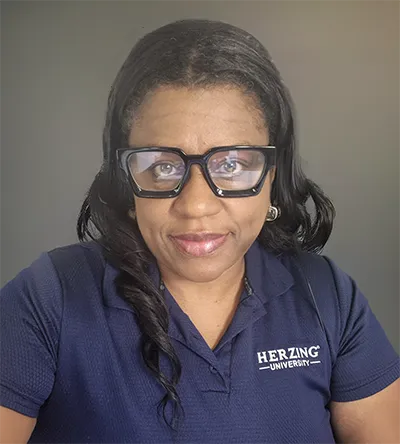
"Systems show statistics; social workers see human lives. The concept of seeing or understanding human lives ties deeply into a few key social worker skills. These skills are empathy, perspective-taking, social observation, and active listening.
Empathy and perspective-taking encourages appreciation for someone else's experiences and emotions. It also relies on social observation and active listening to notice and accurately interpret the subtle details of the human condition."
Dr. Riane Hinton DSW, LMSW
Program Chair - Master of Social WorkDr. Hinton is an established social work professor with over 20 years of teaching experience, 5 years as a social work program director, and 8 years in higher education. Dr. Hinton has extensive practice and teaching experience in child abuse and neglect, special education advocacy, family violence, mental health, grant writing and suicide prevention. She has delivered numerous professional presentations and continuing education sessions. Dr. Hinton is a licensed master social worker who has provided services to many community boards. Dr. Hinton has received several teaching recognitions and was awarded the 1st Higher Education Retiree Scholarship ($2,000), and she is a faculty higher education teaching release research scholarship recipient. She was a co-investigator of a $40,000 grant to investigate the barriers to early cancer detection in marginalized communities. She is a certified lifeguard and a licensed life insurance agent. She likes to teach swimming, coach volleyball, and mentor students.
Clinical Skills
Clinical skills are teachable abilities or knowledge typically acquired through formal education and training programs. These skills are fundamental to social work practice and are typically learned through academic coursework, practical field placements, and continuous professional development. They can all help you to determine the type of career and specialization that is right for you.
Here are five essential clinical skills social workers must master:
1. Advocacy
Social workers are advocates for their clients, working tirelessly to safeguard their rights and ensure access to essential services like housing, healthcare, and education. Social workers also use their advocacy skills to raise public awareness for institutional solutions that support the clinical needs of vulnerable populations.
2. Assessment and Diagnosis
Social workers are proficient in evaluating the needs, strengths, and challenges of individuals and families. They employ diagnostic tools to develop customized treatment plans for optimal patient care.
To accomplish this, social workers need to understand the warning signs, symptoms, and any indicators that are contributing to a patient’s mental health struggles while developing a customized treatment plan.
3. Case Management
Case management skills allow social workers to create an organized structure that supports the needs of clients, doctors, and other essential personnel involved in health care settings.
Social workers excel in coordinating and overseeing client services, ensuring they have access to the required resources and support. These services can include housing support, financial aid assistance through government support, and medical treatment coordination.
4. Counseling and Therapy
Many social workers are trained to provide individual, group, or family therapy to address emotional and psychological issues. This means a good social worker must address a patient’s underlying mental health condition, develop customized treatment plans that support their long-term health, and establish trust with them.
5. Crisis Intervention
When a patient’s mental condition deteriorates, social workers must be ready to act decisively. Managing and responding to crises is a fundamental skill. Social workers provide immediate support to individuals in distress.
Support can include developing intervention plans to address psychological trauma caused by sudden events, coordinating access to resources, and providing immediate mental health support services.
Ensure Your Skills Shine
When constructing your resume as a social worker, it's imperative to highlight your unique blend of interpersonal and clinical skills, as they collectively constitute your qualifications. Tailoring your resume to emphasize these skills will position you as a competent and compassionate social worker, ready to make a difference in the lives of those you serve. Some easy ways to amplify your skillset on your resume are:
- Quantify Achievements: Whenever possible, quantify your achievements to provide concrete evidence of your skills. For instance, "Assisted in the successful coordination of 50+ cases" or "Enhanced patient well-being through individual therapy sessions, achieving a 95% client satisfaction rate."
- Highlight Relevant Certifications: If you possess specialized certifications or training in specific areas of social work, ensure they are prominently featured on your resume. This provides immediate recognition of your expertise, such as "Certified in Trauma-Informed Care" or "Licensed Clinical Social Worker (LCSW)."
- Showcase Interpersonal Skills Through Accomplishments: In addition to listing soft skills, illustrate how you've applied them effectively in your previous roles. Provide examples of how your communication or problem-solving skills have supported a team and benefitted a patient.
At Herzing University, we're committed to nurturing the skills and knowledge you need to excel in social work. Our MSW program provides a comprehensive foundation for aspiring social workers like you. Your journey begins here, where you can acquire the skills to make a significant difference in the lives of those you serve.
Frequently Asked Questions
Social workers rely on two kinds of skills: clinical skills, the teachable tools you learn through coursework and supervised field placements, and interpersonal skills, the personal qualities you build through practice and experience. You develop both in Herzing's online social work programs, where your coursework is online and your field practicum is in person.
| Clinical skills | Interpersonal skills |
What they are | Teachable abilities and knowledge | Emotional and relational qualities |
How you build them | Coursework and supervised field placements | Practice, experience and personal growth |
Examples | Advocacy, assessment and diagnosis, case management, counseling and therapy, crisis intervention and cultural competence | Active listening, communication, empathy and resilience |
Highlight the mix of clinical and interpersonal skills that make up your qualifications:
- Quantify your achievements: use concrete numbers, such as “coordinated 50+ cases” or “95% client satisfaction rate.”
- Feature relevant certifications: such as “Certified in Trauma-Informed Care” or “Licensed Clinical Social Worker (LCSW).”
- Show interpersonal skills in action: give an example of how your communication or problem-solving helped a client or team.
When you compare online social work programs, look at what shapes your experience and your licensure eligibility:
- CSWE accreditation: required to pursue Licensed Clinical Social Worker (LCSW) status.
- In-person field practicum: hands-on time with real clients is where you build the skills the field requires.
- Practicum placement assistance: so you're not securing a field site on your own.
- Flexible online coursework: asynchronous classes you can fit into your work and family life.
- Multiple pathways: a BSW, an MSW and a faster Advanced Standing option for BSW graduates.
Herzing offers its online BSW and online MSW, built around the nine CSWE professional competencies, with in-person practicums and practicum placement assistance.
At Herzing, you can earn your social work degree online. The online BSW is a 120-credit program with 100% online didactic coursework, typically completed in 36 months full-time.
The online MSW is a 60-credit, 100% online program with asynchronous courses, designed for students whose bachelor's is not in social work. If you already hold a BSW from a CSWE-accredited program, the online Advanced Standing MSW takes about 12 months full-time.
Every program pairs online coursework with an in-person field practicum and placement assistance, and the MSW lets you choose electives across three areas of practice: Mental Health, Medical Social Work, and Children, Families and Aging Services.
Build Your Social Works Skills with Herzing
There is no single personality or list of talents that makes a great social worker. Instead, it is a combination of a variety of traits and skills that can be gained through both education and experience.
Are you ready to take the next step toward a rewarding career in social work? Get in touch to find the path that fits wherever you are in life.
Explore our social work programs at Herzing University
- Alabama
- Alaska
- Arizona
- Arkansas
- California
- Colorado
- Connecticut
- Delaware
- District of Columbia
- Florida
- Georgia
- Hawaii
- Idaho
- Illinois
- Indiana
- Iowa
- Kentucky
- Louisiana
- Maine
- Maryland
- Massachusetts
- Michigan
- Minnesota
- Mississippi
- Missouri
- Montana
- Nebraska
- Nevada
- New Hampshire
- New Jersey
- New Mexico
- New York
- North Carolina
- North Dakota
- Ohio
- Oklahoma
- Oregon
- Pennsylvania
- Rhode Island
- South Carolina
- South Dakota
- Tennessee
- Texas
- Utah
- Vermont
- Washington
- West Virginia
- Wisconsin
- Wyoming