

Go from BSN to MSN – Pediatric Primary Care NP with Herzing University
| Accreditation | CCNE accredited,1Accredited by the Higher Learning Commission |
|---|---|
| Format | 100% online coursework with hands-on clinical practicum experience |
| Paying for school | Scholarships and financial aid available for those who qualify; transfer credit from prior college coursework to reduce cost and time |
| Future pathways | Graduate with an MSN and become qualified for our online Doctor of Nursing Practice (DNP) program; you can earn dual credit towards a DNP. You may also choose a BSN to DNP in Pediatric Primary Care NP program |
| Clinicals | 585 clinical hours—Herzing pledges clinical placement |
| QuickPaths | Transfer credit, stackable credentials, and adaptive learning technology build a faster pathway to a higher education with Herzing University |
Learn More Today!
Ranked by U.S. News & World Report as one of the best online graduate nursing programs in 2026
We Pledge Clinical Placement
Worried about clinical placement? You don't have to be.
At Herzing, clinical placement is built into your experience—because it's essential, and you deserve a program that treats it that way.
There's no guesswork. Just a proven framework backed by a promise. Our promise is your placement.
Clinical Guidance Process and Pledge DetailsRanked by U.S. News & World Report as one of the best online graduate nursing programs in 2026
Overview: PNP-PC MSN Degree Program
The MSN – Pediatric Primary Care Nurse Practitioner degree (BSN to PNP-PC) is a 48-credit graduate program which prepares you for a career as a primary care pediatric nurse practitioner. The degree program provides students with fundamental knowledge and skills in advanced practice nursing, healthcare of infants, children, and adolescents, clinical decision-making, and much more.

Career-focused curriculum
Discover the crucial knowledge and skills required to succeed in your work and build a foundation for continued career growth.
Flexible schedule
We work hard to help you maintain school-life balance, striving to be as flexible as possible for busy non-traditional students.
Virtual services
Access to extensive virtual services, including academic advising, tutoring, support services, technical support and library services.
Lifelong support
We support your ongoing career advancement by providing comprehensive, personalized student services with lifelong career coaching.
Rolling admissions
No application deadlines to worry about. Apply when you’re ready and prepare to get started soon.
Courses & curriculum details
All didactic lecture-style courses are delivered 100% online. You will also be required to complete 585 clinical practicum hours.
We also offer an RN to PNP-PC program for nurses who hold associate degree in nursing. Choose to go from RN to MSN or earn your BSN on the way in our RN to BSN to MSN track. BSN holders may also apply for a BSN to DNP – Pediatric Primary Care NP program and skip earning an MSN to pursue the terminal degree in nursing.
| Program | Months i | Semester Credits |
|---|---|---|
| Master of Science in Nursing in Pediatric Primary Care Nurse Practitioner | 20 | 48 |
i. Average number of months for students to complete program.
Required Core Courses
All courses, 15.00 semester credit hours, are required.
Required Direct Care Courses
All courses, 9.00 semester credit hours, are required.
Required Specialty Courses
All courses, 24.00 semester credit hours, are required.
Clinical Proficiency Exam and Policy
The following modules are 0.00 semester credit hours associated with the policy outlined above. Students are required to take as co-requisite module along with NU 611, NU 642, NU 664 or NU 671, depending on the program of study. Module Number Module Name Semester Credit Hours NSG 0600 Clinical Proficiency Module 0.00 NSG 0600R Clinical Proficiency Remediation Module (if needed) 0.00
Tuition & Cost
Tuition & Cost
The cost of tuition for the PNP-PC MSN program is $770 per credit.
You can potentially earn even greater savings by transferring credit from prior college coursework, applying for financial aid, or potential partnership opportunities through your employer.
Our goal is your career advancement. That’s why we are always working to improve our curriculum and processes to make our program as affordable as possible while preparing you best for success in your work.
Scholarships & Financial Aid
You may be eligible for multiple scholarships and grants—including our Nurses Circle of Achievement scholarship, which offers up to 10% tuition reduction.
Military/Veteran Discounts
Veterans, Active Duty U.S. Servicemembers, and spouses may qualify for a 10-20% tuition discount.
Admissions requirements
To enroll in Herzing’s online MSN – Pediatric Primary Care Nurse Practitioner program, prospective students must live in a state where Herzing University is authorized to offer the PNP-PC MSN program, and:
- Hold a current, active and unrestricted license as a registered nurse (RN) in the same state in which they live. (Note: Holding a multi-state, compact state license and being a resident in a compact license state will be deemed to have met this requirement.)
- Hold a Bachelor of Science in Nursing (BSN) degree from an accredited university or college with an overall minimum GPA of 3.0 on a 4.0 scale.
Clinical Experience: Herzing supports your search for a preceptor
Finding a preceptor or clinical location for a PNP-PC program can be a pain point for many prospective nursing students. With Herzing University you are never on your own.
If you'd like more detail on the process, read our guide to finding a nurse practitioner preceptor, which includes information on what sites you may choose, what kinds of preceptors you can work with, and tips on how to secure a clinical.
Benefits of the Herzing MSN PNP-PC program clinical experience:
Strong University guidance
Herzing goes above and beyond to help you find a clinical site. Our Clinical Guidance Process backed by the Herzing APRN Clinical Placement Pledge ensures you are able to secure clinical placement as part of the PNP-PC MSN program.
You will be ready
Our program includes a Clinical Readiness Course to prepare you for success in the practicum and your clinical experiences during your time here at Herzing University.
Interdisciplinary opportunities
Exposure to diverse pediatric care environments makes you a better, more prepared nurse practitioner. Our priority is your experience to build upon in your new career—the Herzing MSN-PNP program requires a minimum of 585 clinical hours to help ensure you see a variety of pediatric patients. You will earn personalized, valuable clinical experience caring for infants, children and adolescents in times of wellness and illness.
Flexible scheduling
Fitting clinical hours into an already hectic life can be a challenge. In collaboration with your clinical preceptor, you will identify a schedule that works best for you.
We treat you like a professional
You are a student—but in a clinical setting you are accountable to a licensed healthcare provider and their patients. From enrollment to completion, we treat you like the nursing professional you are working so hard to become.
We Pledge Clinical Placement
Worried about clinical placement? You don't have to be.
At Herzing, clinical placement is built into your experience—because it's essential, and you deserve a program that treats it that way.
There's no guesswork. Just a proven framework backed by a promise. Our promise is your placement.
Make your impact as nurse practitioner
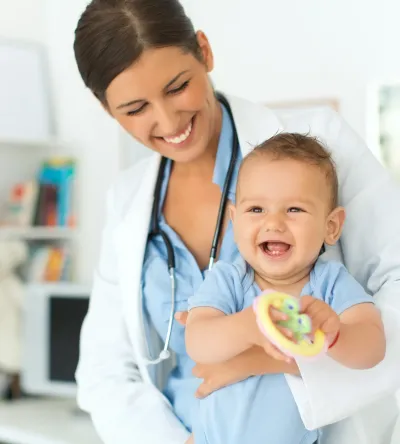
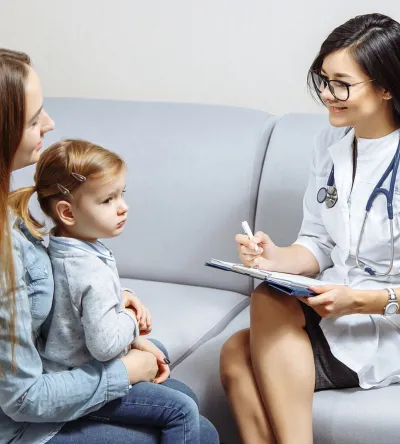
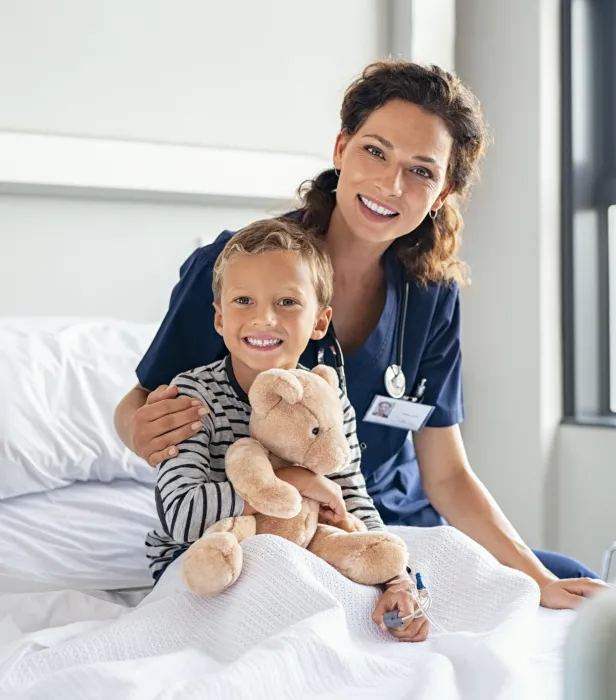
You can greatly expand your scope of practice and find your calling in the pediatric specialty as a pediatric nurse practitioner.
Our curriculum emphasizes primary care skills to prepare you to become a primary caregiver and form long, meaningful relationships with your patients—from infancy through adolescence and even beyond.
The program equips you with the knowledge and skills needed to sit for the Certified Pediatric Nurse Practitioner – Primary Care (CPNP-PC) certification exam from the Pediatric Nursing Certification Board (PNCB).
Job outlook
According to the Bureau of Labor Statistics, nurse practitioners earn an average salary of $137,300 per year ($66.01 per hour).*
Employment of nurse practitioners is expected to rise 41% from 2025-2035, much faster than the average across all occupations.
Begin earning a master’s degree and prepare to join one of the fastest-growing careers in the United States.
Waived Enrollment Fee
Discover the educational pathway designed to maximize your career potential. Reach for greater heights with Herzing University.
Faq
Frequently Asked Questions
Didn't find the answer to your question? Send us an inquiry and we will be happy to answer all your questions!
The primary difference between pediatric nurse practitioners and family nurse practitioners is the patient population. Pediatric NPs focus their care on only pediatric patients, while FNPs provide care across the lifespan, including adults and elderly patients.
If you are also interested in treating older patients—and not only children—you may choose to work towards becoming a family nurse practitioner.
Advancing to nurse practitioner allows you to expand your skillset and potentially earn greater autonomy in your work. While both types of nurses work with the pediatric patient population, most of the differences relate to the general difference between the RN and NP roles.
A few of the biggest differences between RN and NPs include:
- Nurse practitioners can act as a primary care provider, and can potentially spend more time with patients and build longer-term relationships
- Nurse practitioners can prescribe medications
- Nurse practitioners can diagnose patients and write treatment plans
- Nurse practitioners may enjoy a greater work/life balance, as they may have more control over their working schedule
While there are many different types of nurses who work with the pediatric patient population, there are two specific types of pediatric nurse practitioners: primary care pediatric NPs (PNP-PC) and acute care pediatric NPs (PNP-AC).
The PNCB Pediatric Nursing Demographic Report, published in December 2022, states there were 20,254 certified CPNP-PC professionals and 4,419 certified CPNP-AC professionals. Most CPNP-PCs work in private practice, while most CPNP-ACs work in inpatient treatment at children’s hospitals.
The biggest step to becoming a pediatric nurse practitioner is to earn a Master of Science in Nursing (MSN) or Doctor of Nursing Practice (DNP) in a PNP concentration. The basic steps include:
A pediatric nurse practitioner (PNP) is a specialized Advanced Practice Registered Nurse (APRN) who cares for newborns, infants, toddlers, adolescents, and young adults.
Because their patients range in age from infants to young adults, PNPs work with both the patient and their family to provide the right resources and care, including education and emotional support.
Learn more about the general roles and responsibilities of pediatric nurse practitioners.
Working with kids can be incredibly rewarding—particularly for primary care pediatric NPs who can help their patients have a healthy childhood and grow from infancy, through adolescence, and into adulthood.
Even within pediatrics alone you’ll encounter great patient diversity in the age range from birth to roughly 21 years old. Every day will bring new challenges with young people at different stages of development and health issues for you to solve.
Kids are fun!—and some of the most determined, impressive patients you’ll ever work with.
This will depend largely on the board of nursing stipulations in your state. In some instances, it may be permissible for PNPs to see patients past the 18-21 age range who are typically transitioning from pediatric to adult care.
According to the Bureau of Labor Statistics, nurse practitioners across all specialties earn an average salary of $137,300 per year ($66.01 per hour).* Average pay can vary based on many different factors including prior experience, type of medical institution, state of employment, and much more.
Current RNs can potentially become a pediatric nurse practitioner in 2-3 years.
- Associate degree RNs can complete our Accelerated RN to MSN PNP-PC program in as few as 28 months
- Bachelor’s degree RNs can earn an MSN-PNP in as few as 24 months, or 2 years. BSN nurses may also elect a BSN to DNP PNP-PC program, which can be completed in as few as 32 months.
- Master's degree RNs can earn a post master's certificate in as few as 20 months
For those who have yet to become an RN, you’ll need additional time to first earn an associate, bachelor’s, or master's degree in nursing before pursuing an MSN.
Program Finder
MSN - Pediatric Primary Care Nurse Practitioner
OnlineTo learn more about this program, click the Request Info button.
Related Programs




The Student Experience at Herzing
I saw how my job helped others and I decided it was time to challenge myself and take on more responsibilities. It was a challenge I was ready for.
Lori Mathes
NursingGrowing up, I always had a passion for helping people, especially the elderly and young. Years later, I started pursuing my bachelor’s degree in nursing at Herzing University, and now here I am a nursing graduate!
Aminata Kuyateh
Nursing | Atlanta CampusHerzing provided an outstanding support system that kept me on track.
Jill Mutavdzic
Nursing | Online CampusThe program is only a short period in your life, but the impact on your career will last a lifetime.
Stacie Pruett
Nursing | Online CampusMy passion for education is endless, and given the chance, I would always participate in it in some way, shape, and/or form.
Joanna Hogan
Nursing | Online CampusAccreditation & Disclosures
1. The master's degree program in nursing at Herzing University Madison is accredited by the Commission on Collegiate Nursing Education (http://www.ccneaccreditation.org). Herzing University is approved to offer programs in an online learning modality through association with the main campus in Madison, Wisconsin.
Herzing University is accredited by the Higher Learning Commission (hlcommission.org), an institutional accreditation agency recognized by the U.S. Department of Education.
* BLS pay estimates calculate the median annual wage for various occupations. Per the BLS the median wage for an occupation is: "The wage at which half of the workers in the occupation earned more than that amount, and half earned less. Median wage data are from the BLS Occupational Employment and Wage Statistics survey." Bureau of Labor Statistics (BLS), U.S. Department of Labor, Occupational Outlook Handbook 2025. BLS median wage estimates do not represent entry-level wages and/or salaries. Multiple factors, including prior experience, age, geographic market in which you want to work, and degree level and field, will affect career outcomes, including starting salary and earnings as an experienced employee. Herzing neither represents that its graduates will earn the median salaries calculated by BLS for a particular job nor guarantees that graduation from its program will result in a job, promotion, particular wage or salary, or other career growth.
Recent Blog Posts


Flexible Online MSN Programs Designed with Full-Time Nurses in Mind
 Herzing Staff

Choose your NP pathway
Considering all of your options for nurse practitioner specialties?
Herzing University offers multiple nurse practitioner programs for current nurses holding an associate, bachelor's, or master's degree in nursing.
Our goal is to help you walk your career path no matter where you are, or where you want to go.
Explore Herzing NP programs
Waived Enrollment Fee
Discover the educational pathway designed to maximize your career potential. Reach for greater heights with Herzing University.