
Latest
3 Trends that Will Shape the Future of Dentistry
 Herzing Staff
 Feb 10, 2026
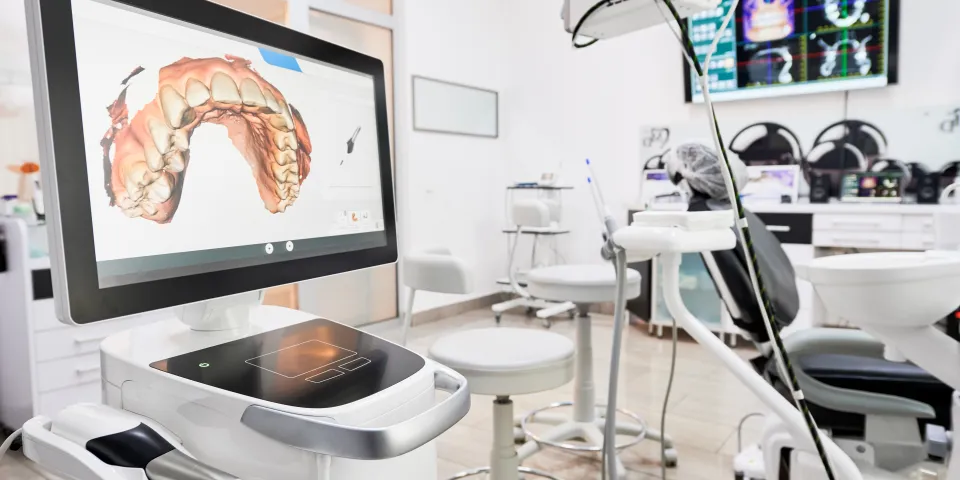
The dental industry is experiencing a technological revolution that's transforming everything from how patients book appointments to how providers diagnose and treat oral health conditions. For aspiring dental hygienists and those already working in the field, understanding these emerging trends is essential to staying ahead in a rapidly evolving profession.
Whether you're considering a career in dental hygiene or looking to expand your skills, these three major trends are reshaping dental care and creating new opportunities across the industry.
AI is Revolutionizing Diagnostics and Practice Management
Artificial intelligence is no longer a futuristic concept in dentistry—it's here now and transforming how dental practices operate. AI-powered systems are analyzing X-rays and scans with remarkable precision, detecting cavities, gum disease and even oral cancer earlier than ever before.
AI is streamlining dental practices by:
- Automating scheduling, billing and patient communication
- Creating personalized treatment plans and simulating outcomes
- Supporting faster, more accurate diagnoses
- Reducing time spent on administrative tasks
Advanced diagnostic tools mean dental hygienists can focus more on direct patient care rather than paperwork. This technology enables a more collaborative, data-driven approach to patient support that improves both treatment accuracy and satisfaction.
Telemedicine and Digital Tools are Expanding Access to Care
The rise of tele-dentistry is addressing one of the most pressing challenges in oral healthcare: accessibility. Virtual consultations, remote check-ins and urgent triage services are making dental care more convenient while expanding access to underserved populations, including those in rural areas, elderly patients and individuals with special needs.
Remote monitoring and virtual follow-ups are proving especially valuable for prevention-focused services and lower-cost care models. Digital workflows are also improving the patient experience through online booking systems, digital forms and enhanced visual communication tools.
Key digital innovations transforming patient care:
- 3D printing for crowns and aligners reduces wait times and costs
- Intra-oral cameras improve visibility and diagnostic accuracy
- CAD systems enable faster, more precise production of dental devices
- Virtual consultations expand access to care for remote and underserved communities
These technologies are making care more personalized, more affordable and more accessible to diverse patient groups.
Sustainability and Personalized Care are Becoming Standard Expectations
Today's patients—especially younger generations—expect practices that align with their values, and sustainability is increasingly at the top of that list. Eco-friendly practices are adopting biodegradable materials, reducing water and energy consumption, and implementing digital workflows that minimize waste.
At the same time, personalized care is becoming the new standard. Genetic testing enables tailored prevention strategies, while customized aligners and prosthetics designed for each patient's unique anatomy improve treatment outcomes. Advanced restorative materials that mimic natural teeth contribute to longer-lasting results.
Comfort-centered technologies enhancing patient experience:
- Pain-reducing injection systems for anxious patients
- Quieter imaging equipment and expanded sedation options
- Virtual reality experiences during procedures
- Augmented reality tools that help patients visualize treatment outcomes
Preparing for the Future of Dental Hygiene
As these trends reshape the dental industry, they're creating new opportunities for professionals. Workforce shortages across many organizations and practice groups make this an opportune time to enter or advance in the field.
The future of dentistry requires professionals who are comfortable with technology, committed to patient-centered care and adaptable to new treatment approaches. For those pursuing dental hygiene programs, understanding these trends is about positioning yourself for a rewarding career in a field that's evolving to better serve patients and communities.
The dental profession is transforming in exciting ways, with AI, digital tools and sustainability initiatives reducing cost barriers, improving access to care and creating better outcomes for patients. For dental hygienists and oral health professionals, the future is bright—and it's arriving faster than ever.
Learn More About Our Dental Hygiene Program
* BLS pay estimates calculate the median annual wage for various occupations. Per the BLS the median wage for an occupation is: "The wage at which half of the workers in the occupation earned more than that amount, and half earned less. Median wage data are from the BLS Occupational Employment and Wage Statistics survey." Bureau of Labor Statistics (BLS), U.S. Department of Labor, Occupational Outlook Handbook 2025. BLS median wage estimates do not represent entry-level wages and/or salaries. Multiple factors, including prior experience, age, geographic market in which you want to work, and degree level and field, will affect career outcomes, including starting salary and earnings as an experienced employee. Herzing neither represents that its graduates will earn the median salaries calculated by BLS for a particular job nor guarantees that graduation from its program will result in a job, promotion, particular wage or salary, or other career growth.






Subscribe to our Newsletter
Get the latest news you need to know, from study hacks to interview tips to career advancement. Have it delivered right to your inbox biweekly.