
Latest
Innovators of Change: Celebrating African Americans Throughout History
 Jessica Dickenson
 Feb 25, 2025
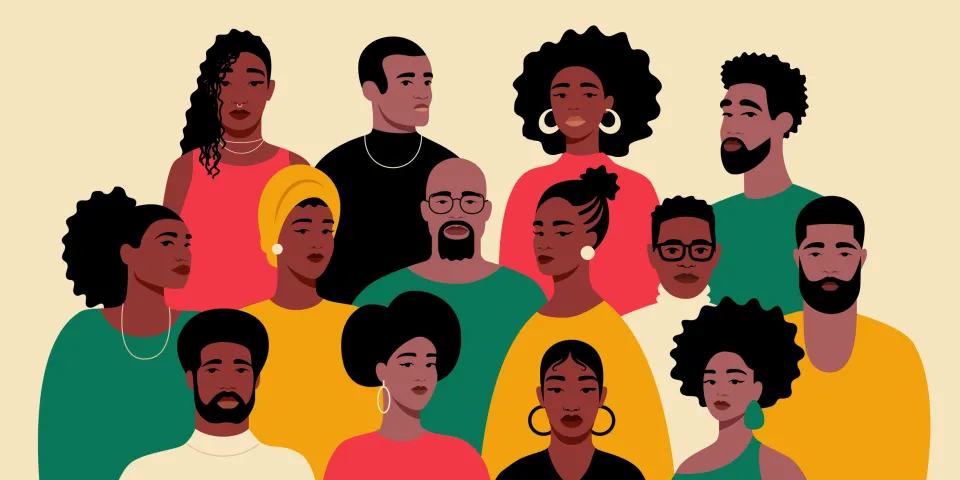
Where would we be without the contributions of Black workers? The answer is not very far at all.
The Black History Month theme, African Americans and Labor, focuses on the various and profound ways that work and working of all kinds intersect with the collective experiences of Black people. While so many Black workers have been exploited throughout history through enslavement, wage discrepancies and discrimination, their work has been transformational despite incredible setbacks. Many of the core programs that Herzing University offers- nursing, healthcare, technology, business and behavioral health- wouldn’t be what they are today without the contributions of these Black pioneers.
Although there are probably thousands of unsung heroes in the annals of history, here are just a few of the most significant leaders that we should honor, not just during Black History Month, but every day of the year.
Nursing- Mary Eliza Mahoney
While there are hundreds of famous Black nurses, they all stem from the first professionally licensed nurse in the United States, Mary Eliza Mahoney. While many African Americans served as nurses before her, Mahoney has the distinction of being the first to graduate from an American Nursing school.
Mahoney was born to in Boston, Massachusetts to two freed slaves. When she was in her teens, Mahoney knew that she wanted to become a nurse, so she began working at the New England Hospital for Women and Children. Mahoney worked for 15 years in a variety of roles like a janitor, cook, washerwoman and nurse’s aide.
When this hospital opened one of the first nursing schools in the United States, Mahoney enrolled in the hospital’s professional graduate school for nursing in 1878, at the age of 33. Of the 42 students who entered the program, only four completed it. Mahoney was one of the women who finished the program, making her the first African American in the US to earn a professional nursing license.
After she finished her training, she pursued a career as a private nurse to focus on the care needs of individual clients. In 1908, she co-founded the National Association of Colored Graduate Nurses (NACGN). After decades as a private nurse, Mahoney became the director of the Howard Orphanage Asylum for black children in Kings Park, Long Island in New York City. She finally retired from nursing after 40 years in the profession only to champion women’s rights until her death in 1926.
Healthcare- Dr. Charles Richard Drew
Every two seconds someone in the U.S. needs blood. Even seemingly small donations can go a long way, with a single donation having the potential to save up to three lives. But blood donation as we know it wasn’t always the way it was collected. Before the early 1930s, blood was collected from donors for transfusion when needed, which could be at any time of the day or night.
This would all change when a native of Washington, D.C., Dr. Charles Richard Drew, started investigating transfusion as part of his surgery training. Dr. Drew did extensive original research in blood chemistry, fluid replacement and the variables affecting blood preservation. He created a process to type and screen blood, preserve it against contamination and package it on a grand scale. This standardized process has led to what we see today in blood banks around the world.
Drew was sought out by British officials during World War II to create a blood bank for their soldiers and civilians in a campaign called “Blood for Britain”. With Drew’s dedication and meticulous quality control, an amazing 5,500 vials of safe plasma were sent to Britain during the course of the war.
Perhaps ironically, and certainly tragically, blood banks required that the blood donations of blacks be segregated from donations made by whites and Drew openly criticized these policies. Fortunately, Dr. Drew would live to see this inane policy reversed by the Red Cross in 1948 before his untimely death in 1950 as a result of a car accident.
Dr. Drew saved thousands of lives during World War II and millions of lives since his critical discovery, rightly earning him the title, “Father of the Blood Bank.”
Technology – Granville Woods
We’ve all heard of Thomas Edison, but few people know about Granville Woods. Known as "Black Edison," Granville Woods was a Black inventor who made key contributions to the development of the telephone, and streetcar and died with over 50 patents to his name.
Born in Columbus, Ohio, Woods had limited formal schooling but worked various jobs as a railroad engineer, steel mill worker, and on a British ship. From 1876 to 1878, he studied engineering and electricity in New York City which would inspire his later inventions. In 1878, he returned to Ohio, working for the Springfield, Jackson and Pomeroy Railroad and later the Dayton and Southeastern Railway.
It was during this time that he developed ideas for his most notable invention, the "inductor telegraph” or the Synchronous Multiplex Railway Telegraph. This device allowed communications between train stations from moving trains by creating a magnetic field around a coiled wire under the train. This idea was so profound that Thomas Edison would twice file a claim that he had ownership of the patent. Fortunately, Woods was successful both times in defending himself and the claim to his work. When Edison offered Woods a position with the Edison Company so that Edison could benefit from Wood’s work, Wood declined.
Woods' later inventions dealt with more efficient use of electricity. He created an overhead conducting system for rail and trolley cars to run on electric current instead of steam power. His patents would later be bought by Alexander Graham Bell and General Electric.
Business- Charles Clinton Spaulding
Charles Clinton Spaulding was a pioneering business leader who built North Carolina Mutual Life Insurance into the nation’s largest Black-owned business by the time of his death, valued at $40 million. Born in Columbus County, N.C., Spaulding moved to Durham at age 20, where he completed his education and managed a black-owned grocery store. In 1899, he joined the newly formed North Carolina Mutual and Provident Association as a part-time agent and quickly rose to general manager, the company’s first full-time position.
Spaulding’s aggressive marketing strategies, including saturation advertising, helped the company grow rapidly. By 1920, North Carolina Mutual had over 1,000 employees and expanded along the East Coast. In 1923, Spaulding became president, overseeing the firm’s continued success and growth, especially during the Great Depression, when his financial reorganization ensured its survival.
Beyond his business achievements, Spaulding was active in political and social issues. As national chair of the Urban League’s Emergency Advisory Council, he campaigned for New Deal jobs for African Americans. He also worked on voter registration and civil rights issues in Durham and supported black education as a trustee for several universities, including Howard and Shaw University.
Behavioral Health- Thyra J. Edwards
Thyra J. Edwards, born in 1897 in Houston, Texas, was the granddaughter of runaway slaves. She began her career as a schoolteacher in Houston before moving to Chicago, where she worked as a social worker. By the time she was 40, Edwards had become a world-renowned lecturer, journalist, labor organizer, women’s rights advocate and civil rights activist.
By 1944, she was celebrated as one of the most prominent African American women globally. Edwards’ approach to social work was international, seeing her work as a blend of journalism, travel seminars, public speaking and union organizing. By the end of World War II, she became the executive director of the Congress of American Women.
In 1953, Edwards established the first Jewish childcare program in Rome for children affected by the Holocaust. She believed social work should advocate for marginalized groups, focus on women's issues, and serve diverse populations. Her professional philosophy emphasized the global struggle of Black people and challenged the belief that Black social workers should only focus on African Americans.
Her activism led her to join the Communist Party in the 1930s, where she supported the Spanish Civil War Loyalists and traveled extensively. Monitored by the FBI for her associations, Edwards died in 1953 at 55.
As we embrace the theme, “African Americans and Labor,” we are encouraged to reflect on intersections between Black people’s work and their workplaces. African Americans’ labor and labor struggles are important for new interpretations and reinterpretations of the Black past, present and future.
Learn More About Our Career Programs
* BLS pay estimates calculate the median annual wage for various occupations. Per the BLS the median wage for an occupation is: "The wage at which half of the workers in the occupation earned more than that amount, and half earned less. Median wage data are from the BLS Occupational Employment and Wage Statistics survey." Bureau of Labor Statistics (BLS), U.S. Department of Labor, Occupational Outlook Handbook 2025. BLS median wage estimates do not represent entry-level wages and/or salaries. Multiple factors, including prior experience, age, geographic market in which you want to work, and degree level and field, will affect career outcomes, including starting salary and earnings as an experienced employee. Herzing neither represents that its graduates will earn the median salaries calculated by BLS for a particular job nor guarantees that graduation from its program will result in a job, promotion, particular wage or salary, or other career growth.








Subscribe to our Newsletter
Get the latest news you need to know, from study hacks to interview tips to career advancement. Have it delivered right to your inbox biweekly.