
Program availability
Your Preferences
Update your Zip code, preferred campus, and preferred program
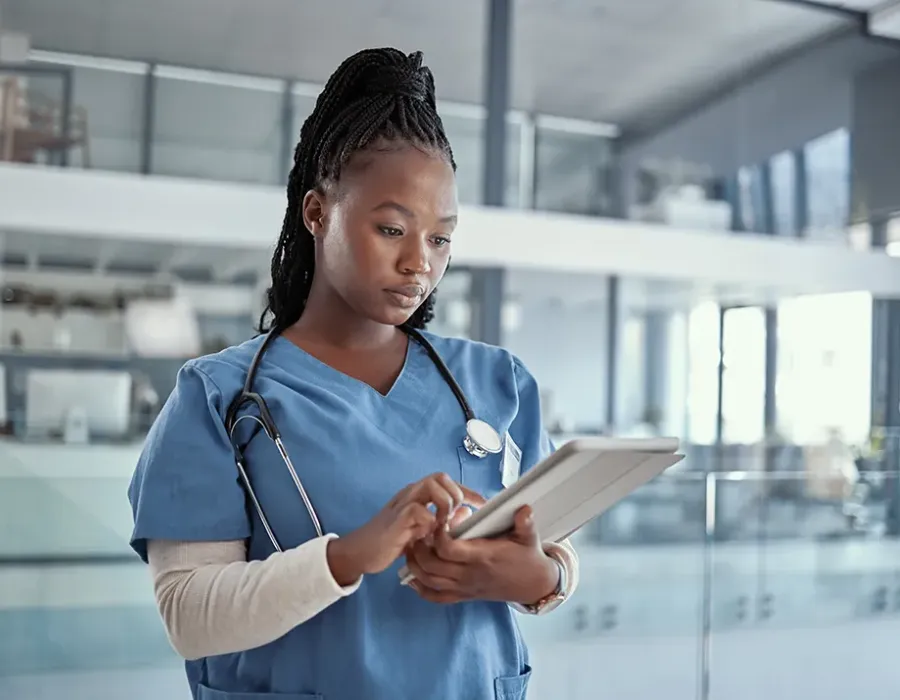
How to Become an Informatics Nurse: A Starter Guide
Informatics nurses use their medical and technological expertise to optimize healthcare workflows. Learn what this career entails and how you can get started.


Reviewed by Dr. Kristen Dickerson, PhD, MSN, MPH, RN, MLT (ASCP) – Lead Faculty, Public Health Nursing
Starting a Career as an Informatics Nurse
Informatics nurses are the essential link between clinical care and health information technology. Using computer science, data analytics, and nursing knowledge, informatics nurses help ensure healthcare teams work efficiently, improve patient safety, and optimize electronic health records (EHR) systems. If you want to improve healthcare delivery on a system-wide level, it's a great career path to consider.
Steps to Take to Become an Informatics Nurse
Becoming an informatics nurse begins with a strong foundation in registered nursing, followed by specialized education in health informatics. Steps include:
- Earn an undergraduate nursing degree: First, you must become an RN by earning an Associate of Science in Nursing (ASN) or a Bachelor of Science in Nursing (BSN) from an accredited program (this may be in-person or online) and pass the NCLEX-RN exam.
- Gain clinical experience: Working for 1 to 3 years as a bedside RN provides valuable real-world patient experience. This is beneficial, but not necessarily required for all informatics roles. Understanding how patient care, physician orders, and clinical documentation function in real time is important when designing effective health IT systems.
You can pursue specialized informatics education:
- Graduate certificates: These are short-term options that offer health IT training for nurses who already hold a degree.
- Master of Science in Nursing (MSN) in Nursing Informatics: An MSN prepares you for advanced and leadership roles in the field. Curriculum includes healthcare data analytics, database management, systems design, and leadership skills. An MSN is not required for all informatics nursing positions, though it can greatly increase your qualifications for the job you really want.
After earning their MSN, students may choose to pursue their Doctor of Nursing Practice (DNP) or PhD and focus on research and scholarly studies.
Nursing Informatics Certifications
While not required, earning a certification demonstrates your expertise, and can help advance your career and earning potential. Eligibility requirements vary, and completion of a nursing informatics program alone does not guarantee eligibility for certification.
Some popular certifications include:
- Informatics Nursing Certification (NI-BC): Offered by the American Nurses Credentialing Center (ANCC), this board certification validates knowledge in nursing informatics principles, software development lifecycles, data management, and human factors in healthcare.
- Certified Associate in Healthcare Information and Management Systems (CAHIMS) or Certified Professional in Healthcare Information and Management Systems (CPHIMS): Offered by HIMSS (Healthcare Information and Management Systems Society), these certifications demonstrate broad competency in healthcare IT and system management.
Additional learning opportunities
Joining a professional organization like the American Medical Informatics Association (AMIA) or the American Nurses Association (ANA) is a great way to expand your professional networks. More than a social group, these organizations can help you connect with nursing leaders and get ahead of the curve on clinical and informatics standards.
What is an Informatics Nurse?
An informatics nurse helps optimize an organization’s EHR system and other technology. They bridge the gap between clinical healthcare providers, information technology professionals, and administrative leaders. It’s a dual role, with two key focuses:
- Clinical care insight: Informatics nurses are registered nurses (RNs) with hands-on clinical experience. They understand the daily workflows of bedside nurses, physicians, and support staff.
- Health technology and data management: Informatics nurses analyze health data, design and customize clinical software, and evaluate EHRs and digital health tools.
Translating clinical needs into technical solutions allows informatics nurses to ensure that health IT tools are user-friendly, compliant, and designed to improve workflow efficiency.
What Are the Key Responsibilities of an Informatics Nurse?
The day-to-day work of an informatics nurse requires a blend of clinical insight, data literacy, systems analysis, and project management skills. Typical duties of an informatics nurse include:
- EHR optimization and customization: Designing, testing, and refining electronic health record systems and clinical documentation tools to fit clinical workflows.
- Clinical data analysis: Analyzing patient data, health outcomes, and trends to support clinical decision-making, quality improvement initiatives, and safety protocols.
- User training and support: Developing educational materials and training clinical staff on new healthcare technologies, software updates, and digital security measures.
- System implementation and testing: Collaborating with IT teams to select, install, test, and troubleshoot new health technology applications and hardware.
- Quality and safety auditing: Utilizing data analytics to identify clinical errors, evaluate patient care outcomes, and streamline patient safety processes.
- Regulatory compliance: Ensuring health IT systems and data management practices comply with HIPAA, HITECH, Joint Commission standards, and federal health reporting mandates.
- Workflow assessment: Observing and analyzing clinical practice to eliminate redundant documentation and optimize bedside technology use.
- Change management: Leading teams through technology transitions to encourage adoption and minimize operational disruptions.
- Artificial intelligence (AI) evaluation and oversight. Assessing AI-powered healthcare tools for accuracy, bias, transparency, and patient safety to support their responsible use in clinical settings.
- Clinical decision support: Developing and evaluating evidence-based alerts, clinical recommendations, and other tools that help healthcare professionals make informed decisions at the point of care.
- Healthcare interoperability: Establishing and improving how patient information is exchanged between EHRs and other healthcare systems to support accurate data sharing and coordinated care.
It’s also important for informatics nurses to have strong communication and project management skills. This allows them to work seamlessly across departments on projects related to system implementation, upgrades, or process improvements.
What Job Titles do Informatics Nurses Have?
Informatics nurses may have a wide range of job titles, depending on where they work and what their focus is. Some popular nursing informatics roles are:
- Nursing informatics specialist: Bridging patient care and technology, these professionals manage IT solutions, educate staff, and protect health data security. They may also work as analysts or managers overseeing a team.
- Clinical informatics nurse: Focused on day-to-day operations, they optimize electronic health records (EHRs), streamline workflows, and drive process improvements. In leadership positions – like a Chief Nursing Informatics Officer (CNIO) – they shape long-term organizational tech strategies.
- Informatics nurse consultant: Acting as expert guides during health tech rollouts, consultants support organizations with system selection, project management, and workflow redesign.
Where do Informatics Nurses Work?
Informatics nurses work across a wide variety of healthcare settings; in fact, they can work in any organization that manages health records or health IT systems. This includes hospitals and clinics, as well as healthcare software and tech firms, and research institutions.
Start your path to a career in nursing informatics
Nursing informatics places you at the intersection of modern medicine, data science, and patient care technology. By mastering both clinical care and technical systems, you’ll play a vital role in improving patient outcomes, enhancing efficiency, and shaping the future of healthcare delivery.