
Program availability
Your Preferences
Update your Zip code, preferred campus, and preferred program
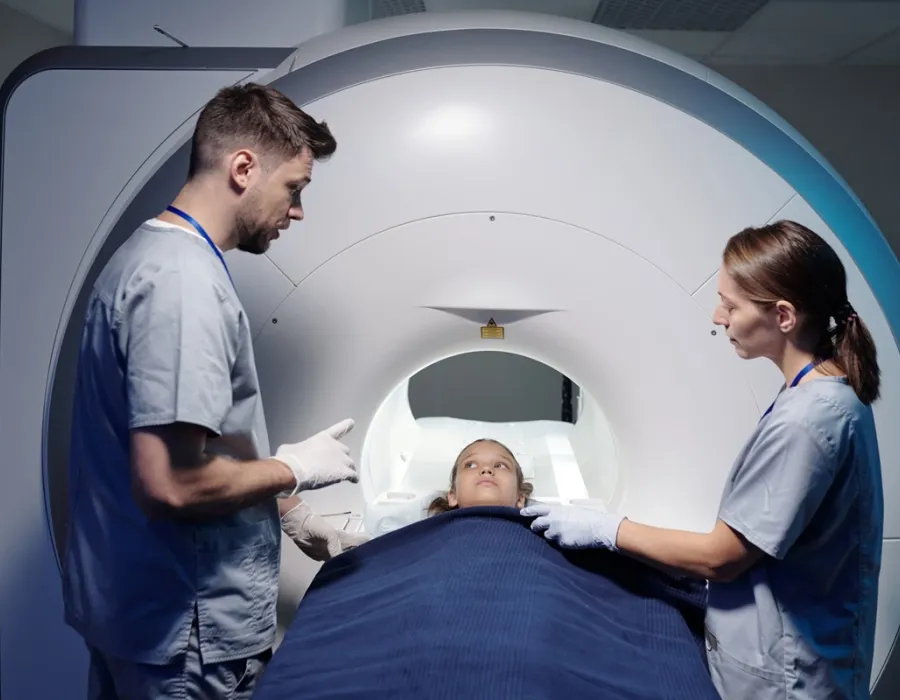
Imaging Assistant: Supporting MRI and Rad Techs
Discover a growing entry-level position in medical imaging which represents a strong first step into a rewarding career path in radiologic technology.
Pursue a growing entry-level position in medical imaging
Behind every X-ray, CT scan, or MRI is a dedicated team – and imaging assistants keep it running. Becoming an imaging assistant is a great way to enter the healthcare field. You’ll work alongside radiologic technologists to prep rooms, assist patients, and keep the department moving.
If you are exploring a career in healthcare, working as an imaging assistant offers a hands-on, front-row seat to modern diagnostic medicine.
What They Do
What does an imaging assistant do?
An imaging assistant provides clinical, administrative, and logistical support across diagnostic radiology departments. Imaging assistants manage tasks before, during, and after a procedure, supporting the radiologic technologists who operate advanced-level radiation or magnetic medical imaging equipment.
What are the main responsibilities of an imaging assistant?
- Patient preparation and care: Bringing patients from waiting areas to imaging rooms, assisting patients onto scanning tables, assists the technologists with patient positioning and screening, and ensuring overall patient comfort.
- MRI safety screening: Conduct patient intake screening to ensure patient safety within the magnetic resonance (MR) environment and obtain designation as Level II MR Personnel through appropriate MR safety education and training.
- Room setup and cleaning: Sanitizing exam rooms between procedures, replacing linens, maintaining positioning equipment and coils, and stocking imaging supplies.
- Patient and clinic workflows: Assisting with patient transfers (gurney-to-table or wheelchair), transporting patients to and from hospital floors, and managing the waiting room.
- Administrative support: Entering patient data, managing scheduling for the center, and coordinating with nursing units.
Where They Work
Where do imaging assistants work?
Imaging assistants work in a variety of healthcare settings, such as:
- Acute care hospitals
- Outpatient imaging centers
- Emergency departments
- Diagnostic laboratories and specialty clinics
Across all settings, imaging assistants collaborate with a healthcare team that typically includes:
- Radiologic technologists (“Rad Tech”): Imaging assistants help rad techs with patient positioning, room preparation, and technical equipment setup for X-ray, CT, and fluoroscopy procedures.
- Magnetic resonance technologists (“MRI Tech”): Imaging assistants help MR techs by taking on non-image acquisition tasks that improve workflow, patient safety, and efficiency.
- Nurses: Imaging techs may help coordinate patient hand-offs to nurses before or after a procedure.
- Radiologists: Imaging assistants ensure patient records and relevant scans are properly ordered for physician review.
Educational Requirements
What are the educational requirements to become an imaging assistant?
Fortunately, this role is an entry-level clinical position with minimal education requirements, making it a great entry point into healthcare.
Typically, you’ll only need a high school diploma or GED. It may be beneficial if you have prior medical experience as a certified nursing aid (CNA) or medical assistant (MA).
Do imaging assistants need to be certified?
While not required by all employers, formal credentials can help you stand out in the radiation image services field.
The American Registry of Radiologic Technologists (ARRT) recently began offering a dedicated credential: Imaging Assistant, Magnetic Resonance, I.A.(MR)(ARRT). This was designed specifically to support registered technologists (RTs) in the MR environment, where imaging assistants help with:
- Level 2 MR safety protocols
- Patient care, prep, and positioning
- Assisting techs with contrast administration
Having this certification also demonstrates your training as an imaging assistant and allows technologists to deliver higher-quality care. You can apply your knowledge and certification to this type of medical role.
Waived Enrollment Fee
Discover the educational pathway designed to maximize your career potential. Reach for greater heights with Herzing University.
What career pathways are there for imaging assistants?
Working as an imaging assistant can be a steppingstone toward advanced roles in radiology:
- Radiologic Technologist (RT): Earning your associate degree in radiologic technology prepares you to get your radiographer license and operate diagnostic equipment independently.
- Registered Radiologist Assistant (RRA): Under a radiologist’s supervision, RRA’s manage complex patient cases and perform select clinical procedures.
Job Outlook
What is the job and salary outlook for imaging assistants?
Demand for diagnostic imaging professionals continues to rise as the population ages and non-invasive diagnostic techniques expand.
The Bureau of Labor Statistics does not provide data for imaging assistants specifically, as it’s generally considered an entry-level type of support role under the radiologic technology umbrella. Imaging assistants who eventually do choose to earn the associate’s degree education generally required to practice as a rad tech can earn excellent pay.
The average salary for radiologic technologists and technicians is $83,840 per year ($40.31 per hour). Overall employment of radiologic and MRI technologists is projected to grow 5% from 2025-2035, faster than the average for all occupations.*
Take the first step in a new healthcare career pathway
Working as an imaging assistant is a great entry pathway into modern diagnostic medicine. You’ll gain hands-on clinical experience, build your professional network in healthcare, and make a difference in people’s lives.
You can get your foot in the door, build your experience and comfort in medical imaging, and determine if radiologic technology is a field that’s right for you.
Learn more about our associate degree program in radiologic technology
* BLS pay estimates calculate the median annual wage for various occupations. Per the BLS the median wage for an occupation is: "The wage at which half of the workers in the occupation earned more than that amount, and half earned less. Median wage data are from the BLS Occupational Employment and Wage Statistics survey." Bureau of Labor Statistics (BLS), U.S. Department of Labor, Occupational Outlook Handbook 2025. BLS median wage estimates do not represent entry-level wages and/or salaries. Multiple factors, including prior experience, age, geographic market in which you want to work, and degree level and field, will affect career outcomes, including starting salary and earnings as an experienced employee. Herzing neither represents that its graduates will earn the median salaries calculated by BLS for a particular job nor guarantees that graduation from its program will result in a job, promotion, particular wage or salary, or other career growth.