
Latest
A Day in the Life of a Home Health Nurse
 Herzing Staff
 Jul 1, 2026
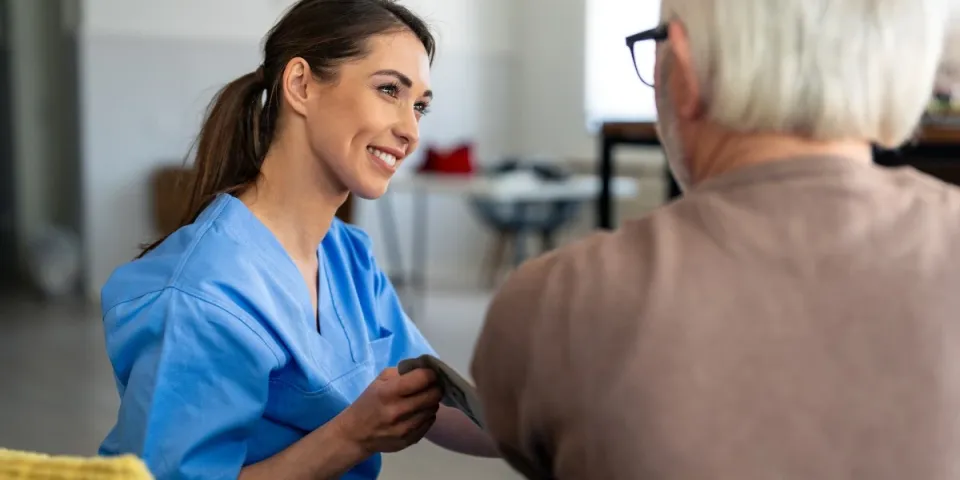
If you've ever considered a nursing career outside of a hospital or clinic, home health nursing might be exactly what you're looking for. As a visiting nurse, you bring care directly to patients in their homes, working one-on-one with people recovering from surgery, managing chronic illness, or navigating life with long-term conditions.
But what does a typical workday actually look like? Here's an on-the-ground look at the schedule, the skills, and the realities of life as a home health nurse.
Before the Day Begins: Planning Your Route
A home health nurse's day often starts the evening before. Most nurses review their schedule, map out patient addresses, and sequence visits by location and patient need. Some agencies use scheduling tools built into their electronic medical records (EMR) to help.
In the morning, nurses may join a brief team call before hitting the road. These check-ins give the care team a chance to discuss patient progress and flag any concerns.
On the Road: Travel Between Patients
Unlike hospital nursing, home health nursing means your "unit" is spread across a geographic area. You'll spend part of your day driving between patient homes, which can be a perk or a challenge depending on your personality. Most agencies reimburse for mileage. Because you're on the move all day, staying organized in your car is essential. Nurses typically carry supplies ranging from wound care materials to equipment for venipuncture and catheter changes.
At the Patient's Home: What Actually Happens
Each visit looks a little different depending on whether it's a start-of-care visit or a routine follow-up. Here's what home health nurses commonly do:
- Comprehensive nursing assessments: Every visit typically includes a head-to-toe assessment and a vital signs check.
- Skilled nursing procedures: Wound care, wound vacs, leg compression wraps, central line dressing changes, Foley catheter changes, PleurX draining, ostomy care, and implanted port access are all common in the home setting.
- Patient education: Many patients receive home health services primarily to learn about their diagnoses and medications. Teaching someone about a new insulin regimen or a low-sodium diet for hypertension is a core part of the job.
- Care plan documentation: Charting is a significant part of every visit. Experienced nurses complete documentation before driving to the next patient to avoid a backlog later in the day.
A typical day might include a pleurX draining in the morning, a wound care visit, patient education appointments focused on acute kidney failure and a new insulin regimen, a catheter change and one more wound care visit before wrapping up by mid-afternoon.
Start of Care vs. Follow-Up Visits
Not all visits are equal. A start-of-care visit is significantly more involved than a routine follow-up, requiring thorough documentation that can take an hour or more to complete. Many nurses finish start-of-care charting at home after their patient visits are done. Routine follow-up visits are shorter and more procedural, though accurate documentation is still required before moving on.
Key Skills for Home Health Nurses
Home health nurses operate independently. There's no charge nurse down the hall and no colleague to consult in a pinch. That makes these skills essential:
- Critical thinking: You're making clinical decisions alone in uncontrolled environments. A sterile procedure that's simple in a hospital can get complicated when a patient has poor lighting or pets underfoot.
- Time management: You control your own schedule, which is both a freedom and a responsibility. Efficient nurses typically see their first patient around 9 a.m. and finish by early- to mid-afternoon.
- Adaptability: Schedules change and patients cancel. You may be asked to pick up an unplanned visit across town. Flexibility is non-negotiable.
The Rewards of Home Health Nursing
The flexibility of the home health schedule is one of its most frequently cited benefits. Nurses can often structure their day around personal obligations in ways that shift nurses simply can't. The work is also deeply personal. You get to know your patients over time, see their progress, and play a genuine role in helping them maintain independence at home.
If you're a nursing student drawn to autonomy, variety, and one-on-one patient relationships, home health nursing is worth a closer look. Herzing offers a range of nursing programs to help you build the foundation for a career in this growing field.
Learn more about what you need to do to become a home health nurse
* BLS pay estimates calculate the median annual wage for various occupations. Per the BLS the median wage for an occupation is: "The wage at which half of the workers in the occupation earned more than that amount, and half earned less. Median wage data are from the BLS Occupational Employment and Wage Statistics survey." Bureau of Labor Statistics (BLS), U.S. Department of Labor, Occupational Outlook Handbook 2025. BLS median wage estimates do not represent entry-level wages and/or salaries. Multiple factors, including prior experience, age, geographic market in which you want to work, and degree level and field, will affect career outcomes, including starting salary and earnings as an experienced employee. Herzing neither represents that its graduates will earn the median salaries calculated by BLS for a particular job nor guarantees that graduation from its program will result in a job, promotion, particular wage or salary, or other career growth.




Subscribe to our Newsletter
Get the latest news you need to know, from study hacks to interview tips to career advancement. Have it delivered right to your inbox biweekly.