
Latest
Radiologic Tech School: How Long It Takes and What to Expect
 Herzing Staff
 Jul 24, 2026
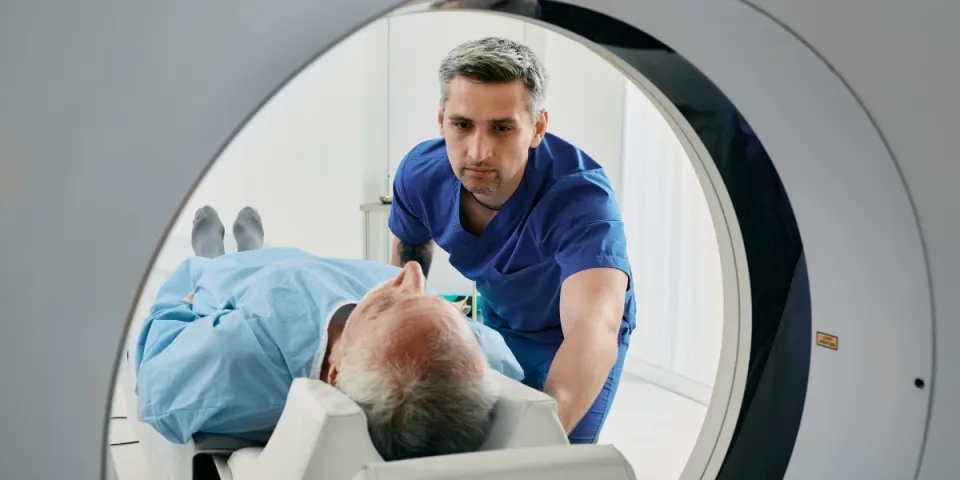
If you’re drawn to healthcare, science and hands-on patient care, becoming a radiologic technologist could be a strong fit for you. What does it take to get started, and how long will it take? Most people enter the field by earning an associate degree, which takes about two years of full-time study. At Herzing University, the Associate of Science in Radiologic Technology takes an average of 24 months to complete.
A radiologic technologist, also called a rad tech, radiographer, or R.T.(R), performs X-ray exams and other diagnostic imaging procedures that physicians use to diagnose and treat injury and illness. It’s a career that blends technology, anatomy and direct patient care.
Demand is steady, too. The U.S. Bureau of Labor Statistics projects employment of radiologic and MRI technologists to grow 5% from 2024 to 2034, faster than the average for all occupations, and reports an average annual salary of $83,840 ($40.31 per hour) for radiologic technologists.*
Below, you’ll find clear answers about program length, what you’ll study, what can change your timeline and how certification works so you can decide on the path that’s right for you.
How long is radiologic tech school?
For most aspiring rad techs, radiologic technology school means earning an associate degree, which generally takes about two years of full-time study. This is the standard entry-level credential employers look for, and it’s the path Herzing University offers.
Herzing’s Associate of Science in Radiologic Technology takes an average of 24 months to complete. The program is offered on campus at our Orlando, FL; Tampa, FL; Clarksville, TN; and Dallas, TX campuses. The program is designed to prepare you to sit for the national certification exam once you graduate.
What will you study in a radiologic technology program?
A radiologic technology program combines classroom instruction, hands-on lab practice, and in-person clinical education in real healthcare settings. You’ll build both the scientific knowledge and the practical skills the role requires.
At Herzing, the Associate of Science in Radiologic Technology requires a minimum of 76 semester credit hours. The coursework is progressive, meaning each course builds on the one before it, and includes subjects such as:
- Human anatomy and physiology
- Methods of patient care
- Principles of radiography and radiation physics
- Radiographic procedures and positioning, with hands-on labs
- Radiation safety and protection
- Radiologic pathology and image analysis
- Cross-sectional anatomy
- Medical terminology, professional development, and medical ethics
Much of your learning happens through hands-on practice. Herzing’s program includes six clinical education courses, where you practice in clinical settings under supervision. You can review the full course sequence in the Herzing University catalog.
What can affect how long radiologic tech school takes?
Even though most associate-degree programs run about two years, a few factors can shape your individual timeline.
Full-time enrollment and program structure
Radiologic technology programs are typically structured as a set sequence of courses taken in order, so students move through them as a group from start to finish. You'll join a cohort at Herzing and take your courses in a set sequence, one building on the next.
Transfer credits and prior education
If you’ve previously completed college coursework, you may be able to transfer eligible credits, which can reduce the number of general education courses you need to take. Whether specific credits transfer is always determined by the receiving institution. You can learn more on our page for transfer students.
Clinical education requirements
Clinical practice isn’t optional; it’s a core, required part of becoming a radiologic technologist, and it’s built into the program timeline. You will complete these hours in person in real healthcare settings.
Can you complete radiologic tech school online?
You’ll often see “online” programs advertised across healthcare fields, so it’s a fair question. While some general education coursework may be available online, the hands-on lab work and clinical training must be completed in person.
How do you become certified and licensed?
Finishing your degree is your first step. Becoming a working radiologic technologist also involves national certification and, in many states, a state license. Here’s how the process generally works:
- Earn an associate degree from a radiologic technology program that meets the requirements of the American Registry of Radiologic Technologists (ARRT).
- Pass the ARRT certification exam to become a Registered Technologist in Radiography, R.T.(R).
- Obtain a state license where it’s required. Requirements vary from state to state.
- Maintain your certification over time by completing the continuing education the ARRT requires.
Herzing has determined that its Associate of Science in Radiologic Technology curriculum meets the educational requirements for licensure in Florida, Texas and Tennessee where the program is offered.
Where can radiologic technologists work, and how can they specialize?
Earning your degree and certification is the first step into a field with room to grow. Radiologic technologists work in a range of settings, including hospitals, outpatient imaging centers, clinics, physicians’ offices and other diagnostic facilities.
With experience and additional ARRT credentials, many technologists choose to specialize in a particular imaging area. Common specializations include:
- Computed tomography (CT)
- Magnetic resonance imaging (MRI)
- Mammography
- Bone densitometry
- Vascular interventional radiography
- Nuclear medicine and sonography
Adding a specialty can expand the kinds of exams you’re qualified to perform. Pursuing one usually means more focused study and testing after you’re already a registered technologist.
How do you choose the right radiologic technology program for you?
As you compare programs, look at how each one fits your life: where and how it’s delivered, how the clinical education is structured, whether it meets ARRT requirements and how it supports you from enrollment through graduation.
At Herzing University, the Associate of Science in Radiologic Technology is a career-focused program built around hands-on clinicals, experienced faculty and the personalized support for which Herzing is known. The program is designed to help you prepare for certification and take the next step toward a career in diagnostic imaging.
Ready to learn more? Request information about Herzing’s radiologic technology program, or explore how to become a radiologic technologist to see the full picture of the path ahead.
Frequently Asked Questions About Radiologic Tech School
1. What's the difference between a radiologic technologist and a radiologist?
A radiologist is a physician, an MD or DO, who reads medical images and diagnoses conditions. As a radiologic technologist, you're the one who operates the imaging equipment and performs the exams, working under a physician's direction. The paths differ, too: you can enter radiologic technology with an associate degree, while a radiologist completes medical school and residency.
2. What's the difference between an X-ray tech and a radiologic technologist?
You'll often hear the terms used interchangeably, but these are not precisely the same position. A radiologic technologist is a credentialed professional with a college degree who performs many types of medical imaging (like X-rays, CTs, and MRIs). A radiologic technician has less training, often learns on the job, and is usually limited to taking basic X-rays in smaller clinics.
3. Is radiologic tech school hard?
It's a rigorous program, and that's because you're building real clinical skills alongside science-heavy coursework. At Herzing, the coursework is progressive; each course builds on the one before it, covering subjects like anatomy and physiology, radiation physics and patient care, plus clinical contact hours. You won't do it alone, though: you'll have personalized support from experienced faculty the whole way through.
4. What do you need to get into Herzing's radiologic technology program?
To start, you'll complete an enrollment application and meet with a Herzing admissions advisor, and you'll take the TEAS (Test of Essential Academic Skills). Because spots in each cohort are limited, you'll also complete Anatomy and Physiology I and II, with labs, earning a C (70%) or better to continue in the program. Requirements can differ by campus, so your advisor can walk you through exactly what's needed at your location.
5. Is it safe to work around radiation as a radiologic technologist?
Radiation safety is built into both the career and your training. On the job, you'll use protective measures like lead aprons and shielding, and you'll wear a badge that monitors your exposure over time. At Herzing, dedicated coursework in radiation safety and protection helps prepare you to follow these practices with confidence.
Learn more about the Herzing University Radiologic Technology program
* BLS pay estimates calculate the median annual wage for various occupations. Per the BLS the median wage for an occupation is: "The wage at which half of the workers in the occupation earned more than that amount, and half earned less. Median wage data are from the BLS Occupational Employment and Wage Statistics survey." Bureau of Labor Statistics (BLS), U.S. Department of Labor, Occupational Outlook Handbook 2025. BLS median wage estimates do not represent entry-level wages and/or salaries. Multiple factors, including prior experience, age, geographic market in which you want to work, and degree level and field, will affect career outcomes, including starting salary and earnings as an experienced employee. Herzing neither represents that its graduates will earn the median salaries calculated by BLS for a particular job nor guarantees that graduation from its program will result in a job, promotion, particular wage or salary, or other career growth.







Subscribe to our Newsletter
Get the latest news you need to know, from study hacks to interview tips to career advancement. Have it delivered right to your inbox biweekly.