
Latest
How AI Is Revolutionizing Surgical Procedures

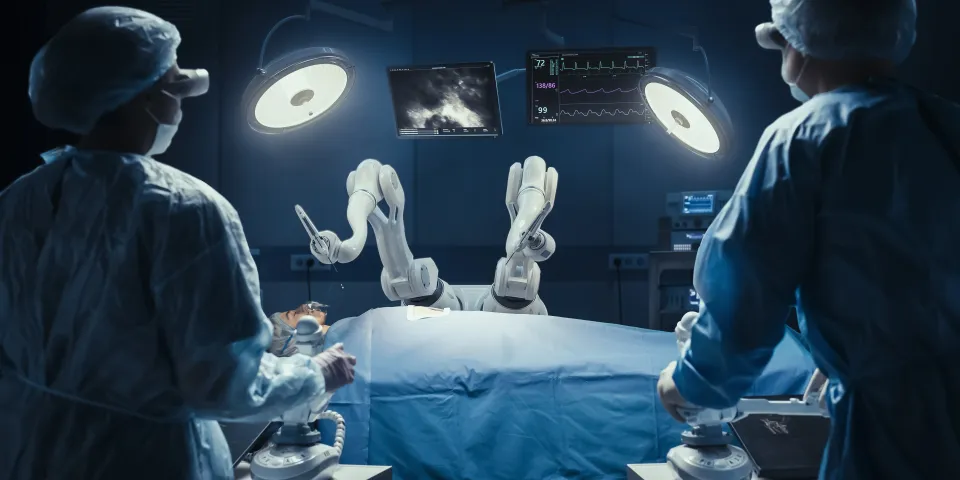
Surgeons have always relied on steady hands, sharp instincts and years of hard-won experience. Artificial intelligence isn't replacing any of that, but it's quickly becoming a partner in the operating room, helping surgical teams plan more precisely, operate with sharper guidance and catch problems earlier than ever before.
How is AI being used in surgery?
Long before a patient reaches the operating table, AI is already at work. Predictive risk models built on a patient's history and test results help surgeons weigh whether an operation is the right call, and scans can be turned into a 3D model of the surgical site so a team can study or even rehearse the procedure beforehand.
Once surgery begins, the technology keeps working alongside the surgeon rather than in place of one. Paired with surgical robots, AI guided instrument control can steady a surgeon's hand and flag structures like blood vessels that are easy to miss. That same precision is what allows robotic systems to reach tight, delicate spaces in the body that would otherwise require a much larger incision to access, and it has been linked to a meaningful drop in surgical errors during minimally invasive procedures.
After the procedure, the same kind of analysis is proving useful for predicting which patients face a higher risk of complications, and wearable sensors paired with AI alerts can flag early signs of trouble well before a problem becomes serious.
What is automated surgery, and are we there yet?
Automated surgery refers to a robotic system carrying out part of or all of a procedure with little or no direct human control, and it's further along than most people realize, though still narrow in scope. Surgeons have already trained a robotic system to suture on its own, and an experimental system has even completed a full laparoscopic procedure, reconnecting two ends of an intestine, without a surgeon's hands on the controls. Even so, this kind of full autonomy on human patients is still rare.
Most of today's automation is limited to small, well-defined tasks like tying a knot or closing a port site rather than an entire operation, and surgeons remain responsible for reviewing and signing off on the work either way.
Will AI replace surgeons?
Surgeons and researchers who build these tools say no. Even the most optimistic reviews of the technology describe it as a highly valuable surgical tool rather than a stand in for the surgeon, and the goal in the operating room is to augment a surgeon's decision making and execution, not replace it. The bigger concern many raise isn't a takeover so much as the opposite risk, that leaning on automation for simple tasks could leave future surgeons with fewer chances to build the fundamental skills they'll need for the complex cases AI can't handle.
What does the future of surgery look like?
The next frontier looks less like robots taking over and more like AI making the invisible visible. Researchers are analyzing surgical video gesture by gesture, connecting split second decisions during an operation to a patient's long term recovery, work that used to take weeks of manual review and now takes minutes. Similar tools are speeding up how quickly clinically useful information can be pulled from pathology slides and genetic data, which could eventually make advanced diagnostics more accessible.
On the training side, AI may one day let future surgeons practice complex procedures in simulation before ever stepping into a real operating room, getting personalized feedback based on their own performance data rather than generic instruction. None of this arrives without real questions about accountability, bias and oversight, and who is ultimately responsible when an algorithm gets something wrong, but most experts agree the technology is moving forward regardless, and the surgical teams who learn to work alongside it well will be the ones best positioned for what comes next.
For students drawn to this kind of technology forward care, becoming a surgical technologist is one direct path into the operating room. Herzing University's Surgical Technology program combines online coursework with hands-on labs and clinical training, preparing graduates to work alongside surgeons and the AI-enabled tools reshaping the field, without requiring years of prior healthcare experience to get started.
Learn More About Our Surgical Tech Programs
* BLS pay estimates calculate the median annual wage for various occupations. Per the BLS the median wage for an occupation is: "The wage at which half of the workers in the occupation earned more than that amount, and half earned less. Median wage data are from the BLS Occupational Employment and Wage Statistics survey." Bureau of Labor Statistics (BLS), U.S. Department of Labor, Occupational Outlook Handbook 2025. BLS median wage estimates do not represent entry-level wages and/or salaries. Multiple factors, including prior experience, age, geographic market in which you want to work, and degree level and field, will affect career outcomes, including starting salary and earnings as an experienced employee. Herzing neither represents that its graduates will earn the median salaries calculated by BLS for a particular job nor guarantees that graduation from its program will result in a job, promotion, particular wage or salary, or other career growth.








Subscribe to our Newsletter
Get the latest news you need to know, from study hacks to interview tips to career advancement. Have it delivered right to your inbox biweekly.