Latest
Radiologic Technology Programs in Florida: What Tampa and Orlando Students Should Know

Interested in a career that combines cutting-edge technology with the chance to make a difference for others every day? Like many others in Florida, you may be considering becoming a radiologic technologist.
Choosing the right degree program for you can seem like a tough decision. According to the National Center for Education Statistics College Navigator, there are 33 associate degree programs in radiologic technology throughout Florida, with five of those near Tampa and another five near Orlando.
At Herzing, we offer an Associate of Science (AS) in Radiologic Technology degree program at our Orlando and Tampa campuses. This guide explains what you'll need to know about radiologic technology career paths in Florida and how you can prepare to pursue your degree with us.
What Do Radiologic Technologists Do?
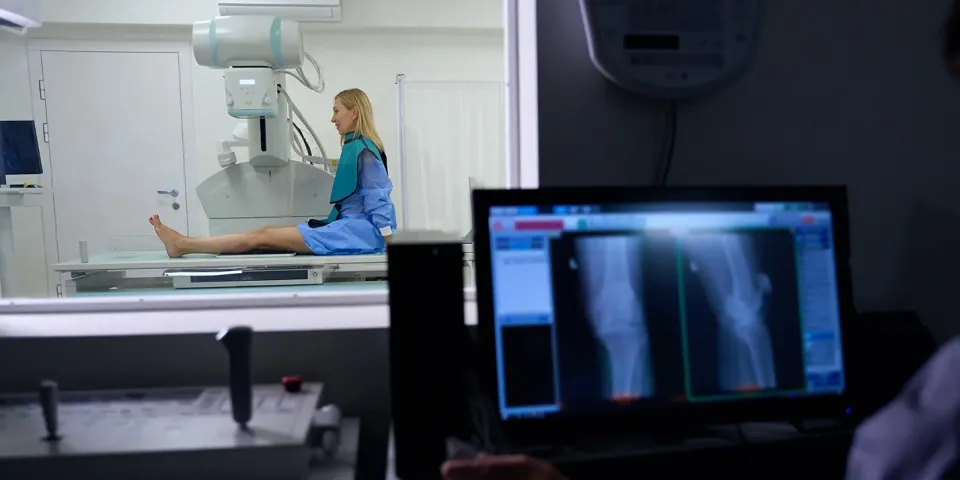
Radiologic technologists, often called rad techs or x-ray techs, are medical professionals who "perform diagnostic imaging examinations," according to the American Society of Radiologic Technologists (ASRT). They work in hospitals, clinics and physicians' offices, supporting care in specialties that range from prenatal care to orthopedics.
According to the U.S. Bureau of Labor Statistics (BLS), a rad tech's day-to-day responsibilities typically include:
- Preparing patients for procedures, including taking a medical history and shielding exposed areas
- Following physicians' orders on which areas of the body to image
- Positioning the patient and the equipment to capture the correct image
- Operating the computerized equipment that takes the images
- Adjusting and maintaining imaging equipment
X-rays are just the starting point. With additional education and certification, rad techs can specialize in a wide range of technologies, including radiation therapy, computed tomography (CT), magnetic resonance imaging (MRI), mammography, bone densitometry and cardiac-interventional or vascular-interventional radiography, per the ASRT.
Career Prospects for Radiologic Technologists in Florida
The national outlook for rad techs is strong. The BLS projects employment of radiologic technologists and technicians to grow faster than the average for all occupations. Pay is competitive, too: nationwide, the mean annual wage for radiologic technologists is $83,840.*
For Florida students, the employment picture is even brighter. Florida is one of the top five states for the number of rad tech jobs, and job growth projections here outpace the national average. According to Projections Central, employment of radiologic technologists in the state of Florida is expected to increase 12.8% from 2024-2034.** National projections over the same period are just 4.3%.
What You'll Learn in Our AS in Radiologic Technology
You can earn your rad tech degree at Herzing’s Orlando and Tampa campuses. Both campuses offer the same curriculum. You’ll take general education courses online, with in-person, hands-on training in our on-campus labs, followed by supervised clinical rotations at local healthcare facilities. The 76-credit program takes an average of 24 months to complete.
Our curriculum is designed to prepare you for the national registry exam offered by the American Registry of Radiologic Technologists (ARRT) and to apply for Florida State Licensure as a general radiographer.
Key Courses in the Major
Your radiologic technology coursework builds from foundational concepts to advanced imaging knowledge. Key courses include:
- Introduction to Radiography
- Methods of Patient Care
- Principles of Radiography I and II
- Radiographic Procedures I, II and III
- Radiologic Pathology
- Cross-Sectional Anatomy
You'll also complete Anatomy and Physiology I and II with labs, which require a grade of C (70%) or better to continue in the program.
Lab Training
Each Radiographic Procedures course is paired with 30 hours of hands-on time in a dedicated on-campus radiography lab. During lab classes, you'll practice procedures with instructor supervision. The goal is to help you build confidence with positioning and equipment before you begin your clinicals.
Clinical Rotations
You'll complete six clinical education courses at real clinic and hospital sites. This experience helps you apply what you’ve learned in your labs, learn to collaborate with other healthcare professionals and hone your patient communication skills—all competencies that the ARRT requires.
Built-In ARRT Exam Prep
Toward the end of your program, you’ll take a course called Radiography Review. This is specifically designed to help develop test-taking skills in preparation for the ARRT exam.
Certification and Licensure for Rad Tech Grads in Florida
Earning your AS degree doesn’t automatically clear you to work as a rad tech. After you graduate, you’ll still need to complete the process for obtaining certification from the ARRT and a radiologic technology license from the Florida Department of Health.
In some states, graduates may have to take both the ARRT exam and a separate state licensing exam. Fortunately, the Florida Department of Health uses the ARRT's exams for state certification, so there’s no additional test to take.
Steps for Radiologic Tech Certification and Licensure in Florida
Here’s how certification and licensure works for new graduates:
- Apply to the Florida Department of Health. After you finish your degree program, submit an application for certification as a general radiographer (DH Form 1005) along with the required background history report. You can manage your application through the state's online licensing services portal.
- Register for the ARRT exam. Once the state approves your application, you'll register for the ARRT exam at arrt.org. You'll need to prove that you graduated from an ARRT-approved program in radiography. You have a 90-day window from your approval date to take the exam.
- Take your test. You’ll report to a testing center to take your ARRT exam on a computer. The ARRT provides guidance about how exam days work, which you can read here.
- Receive your license. After your test, ARRT sends your scores directly to the Florida Department of Health. It takes about two weeks for your result to be processed. If you’ve passed, your state license will be printed and mailed shortly after that.
Once you pass, you'll earn the credential of Registered Technologist in Radiography, or R.T.(R). Most Herzing graduates plan to take their exam within a few weeks of graduation. However, this process can sometimes take several months. If you need to start working sooner, Florida issues temporary certificates for the period between your graduation date and your exam date.
You’ll also need to renew your rad tech license every two years. The state requires you to complete 12 hours of continuing education coursework in order to qualify for each renewal.
Admission Requirements for Herzing's AS in Radiologic Technology
To be admitted to the radiologic technology program, you'll need to:
- Hold a high school diploma, GED or equivalent
- Demonstrate the capacity to succeed in college-level courses through prior ACT/SAT scores, completion of prior college credit or additional entrance testing
- Complete drug testing, immunization and health checks, since the program includes direct patient contact in a clinical setting
- Accept and acknowledge select statements of policy
- Meet and interview with an admissions advisor and complete an enrollment application
Transferring Credits
If you've already completed college coursework, you may be able to transfer up to 57 approved credits toward your degree. Your admissions advisor can review your transcripts and help you understand which courses may apply.
Entrance Testing
If you don't have qualifying ACT/SAT scores or prior college credit, you'll complete additional entrance testing to show you're ready for college-level coursework. Your admissions advisor will let you know which assessment applies to you and help you plan for it.
Applying to Herzing's AS in Radiologic Technology: Step-by-Step Overview
We offer rolling admissions, so you can apply when you’re ready instead of waiting for September or January. The admissions process usually involves six steps:
- Meet with an admissions advisor. Connect on campus or virtually to talk through the program, your goals and upcoming start dates.
- Submit your application and transcripts. Complete your enrollment application and send transcripts from your prior schooling.
- Complete entrance testing, if required. Finish any required entrance and placement exams.
- Create a funding plan. Work with a financial aid advisor to explore your options, then pay your enrollment fee.
- Prepare for class. Get ready to begin your coursework and hands-on training.
- Complete your health and compliance requirements. This includes drug testing, immunizations and health checks.
See What's Possible When You Study with Herzing in Florida
Find out more about earning the AS in Radiologic Technology at our Orlando or Tampa campus. If you're ready to take the next step, get in touch with an admissions advisor to start your application.
Frequently Asked Questions
Our AS in Radiologic Technology takes an average of 24 months to complete at both our Orlando and Tampa campuses.
Yes. Both campuses offer the same curriculum, combining online general education courses with on-campus labs and clinical rotations at local healthcare facilities.
You'll complete six clinical education courses of 135 contact hours each, for a total of 810 clinical hours.
Yes. Our curriculum is designed to prepare you for the ARRT national registry exam, and the Radiography Review course focuses on building study and test-taking skills for it.
Yes. You may be able to transfer up to 57 approved credits from prior college coursework.
Strong. Per O*NET OnLine, employment of radiologic technologists and technicians in Florida is projected to grow 13% from 2024 to 2034, compared with 4% nationally.
Explore Herzing's radiologic technology programs
Herzing University is accredited by the Higher Learning Commission (hlcommission.org). Herzing University is approved to offer programs in an online learning modality through association with the main campus in Madison, Wisconsin.
* BLS pay estimates calculate the median annual wage for various occupations. Per the BLS the median wage for an occupation is: "The wage at which half of the workers in the occupation earned more than that amount, and half earned less. Median wage data are from the BLS Occupational Employment and Wage Statistics survey." Bureau of Labor Statistics (BLS), U.S. Department of Labor, Occupational Outlook Handbook 2025. BLS median wage estimates do not represent entry-level wages and/or salaries. Multiple factors, including prior experience, age, geographic market in which you want to work, and degree level and field, will affect career outcomes, including starting salary and earnings as an experienced employee. Herzing neither represents that its graduates will earn the median salaries calculated by BLS for a particular job nor guarantees that graduation from its program will result in a job, promotion, particular wage or salary, or other career growth.






Subscribe to our Newsletter
Get the latest news you need to know, from study hacks to interview tips to career advancement. Have it delivered right to your inbox biweekly.