
Latest
A Day in the Life of an OB Nurse
 Herzing Staff
 Aug 20, 2026
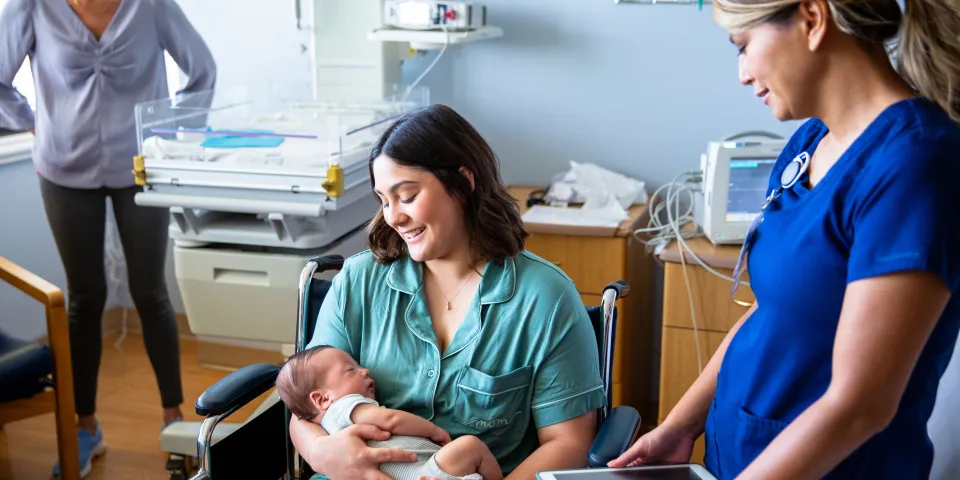
An OB nurse's day centers on continuous monitoring of mother and baby, hands on support through labor and delivery and education that helps new parents feel confident before they leave the hospital. The role blends clinical precision with emotional presence, and no two shifts look quite the same.
What does an OB nurse do?
OB nurses, also called labor and delivery nurses or maternity nurses, care for patients through pregnancy, childbirth and the immediate postpartum period. Depending on the day, responsibilities can include:
- Monitoring fetal heart rate and maternal vital signs
- Assessing cervical dilation and labor progression
- Assisting with epidurals, inductions and C-sections
- Supporting the delivery itself and the first moments of newborn care
- Teaching new parents about breastfeeding, infant care and recovery
EveryNurse describes the job as one that's often "romanticized as a profession centered around the joy of welcoming new life into the world," but the reality includes far more complexity, from managing high risk pregnancies to responding to sudden complications.
What does a typical shift look like?
Most OB nurses work 12-hour shifts that start with chart review and a handoff report from the previous shift. From there, the day can shift quickly. A nurse might admit a laboring patient in the morning, help manage an induction by midday and prepare for an emergency C-section by afternoon, all while checking in on postpartum patients recovering down the hall.
One OB charge nurse described her day on allnurses.com: a 5 a.m. wake up, checks on delivery rooms and crash carts before 7 a.m., an unplanned triage admission at lunch and a delivery just before the shift ends at 7 p.m. In between, she coordinated with physicians, supported a lactation consultant and helped a coworker manage a sudden drop in a patient's blood pressure during an epidural.
As one nurse manager told AllNursingSchools, "in reality, they are an ED nurse, a medical/surgical nurse, an OR nurse and an OB nurse all wrapped in one fantastic package."
What skills does an OB nurse need?
OB nursing rewards adaptability more than routine. Assignments can change instantly when an unscheduled patient arrives or a delivery takes an unexpected turn, so the ability to shift priorities without losing composure matters as much as clinical knowledge. Strong communication skills also matter, since OB nurses coach patients through labor, explain procedures to nervous partners and coordinate closely with physicians, anesthesiologists and lactation consultants throughout a single shift.
Perhaps most importantly, OB nurses need humility. Even experienced nurses encounter new and unpredictable situations regularly, and the willingness to keep learning from every patient is part of what makes the specialty sustainable long term.
Where do OB nurses work?
OB nurses typically work in hospital labor and delivery units, though some also work in maternity wards, birthing centers and outpatient obstetric clinics. Some also work in urgent care and community health clinics, where they may be the first healthcare professional a pregnant woman sees if she lacks access to regular obstetric care. Registered nurses, including those specializing in OB, earn a median annual salary of $93,600, and the field is expected to keep growing as demand for maternal and women's health care rises.
How do you become an OB nurse?
Becoming an OB nurse starts with earning a nursing degree, either an Associate Degree in Nursing (ADN) or a Bachelor of Science in Nursing (BSN) and passing the NCLEX-RN exam. Many nurses gain experience in labor and delivery or a related women's health unit before specializing further, and some pursue the Inpatient Obstetric Nursing (RNC-OB) certification after at least two years of full time OB experience.
For RNs who want to grow beyond the bedside and take on more autonomy in women's health, a Women's Health Nurse Practitioner (WHNP) pathway is worth exploring. WHNPs provide primary care to women across the lifespan, including prenatal visits, gynecological exams and reproductive health counseling, though they don't deliver babies themselves. Herzing University offers several WHNP programs, including an accelerated RN to MSN-WHNP option and pathways to a Doctor of Nursing Practice. Herzing pledges clinical placement for every student, removing one of the biggest hurdles nurses face when pursuing an advanced degree.
Whether an OB nurse decides to stay at the bedside or expand into advanced practice, the work remains rooted in the same purpose: supporting families through one of life's most significant moments.
Learn More About Our Nursing Programs
* BLS pay estimates calculate the median annual wage for various occupations. Per the BLS the median wage for an occupation is: "The wage at which half of the workers in the occupation earned more than that amount, and half earned less. Median wage data are from the BLS Occupational Employment and Wage Statistics survey." Bureau of Labor Statistics (BLS), U.S. Department of Labor, Occupational Outlook Handbook 2025. BLS median wage estimates do not represent entry-level wages and/or salaries. Multiple factors, including prior experience, age, geographic market in which you want to work, and degree level and field, will affect career outcomes, including starting salary and earnings as an experienced employee. Herzing neither represents that its graduates will earn the median salaries calculated by BLS for a particular job nor guarantees that graduation from its program will result in a job, promotion, particular wage or salary, or other career growth.





Subscribe to our Newsletter
Get the latest news you need to know, from study hacks to interview tips to career advancement. Have it delivered right to your inbox biweekly.