
Latest
How Nursing Informatics Has Evolved
 Herzing Staff
 Oct 6, 2026
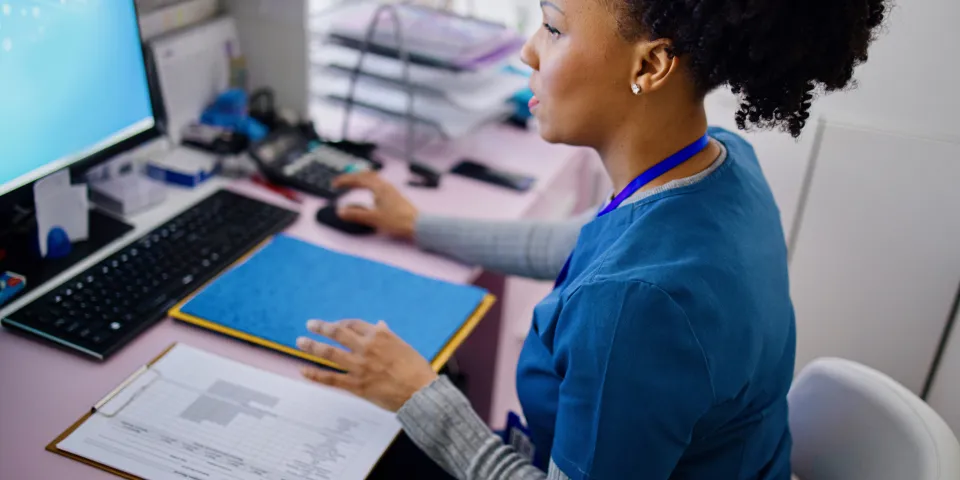
Nurses today have access to more patient data than any generation before them, from lab results and vital signs to full electronic health records tracked in real time. Making sense of all that information and turning it into safer, more efficient care is the job of nursing informatics, a specialty that has grown alongside the technology nurses use every day.
What is nursing informatics?
At its core, nursing informatics blends nursing practice with computer and information science to manage the data, information and knowledge nurses rely on for patient care. It supports decision making for patients, nurses and other providers alike, using tools like information systems, clinical documentation platforms and decision support technology. In plain terms, it's the discipline that helps turn raw healthcare data into something nurses can use at the bedside.
Nurses who specialize in the field, often called informatics nurse specialists, are the ones tasked with designing, selecting and evaluating those systems so they actually fit how nursing care gets delivered day to day.
How has nursing informatics evolved over time?
The history of nursing informatics stretches back further than most people realize. Hospitals first introduced computers in the 1950s, though early systems did little more than store patient records. The field began taking shape as a distinct discipline through the 1980s, as scholars worked to define what nursing informatics meant and how it differed from broader medical informatics. That work paid off in 1992, when the American Nurses Association officially recognized nursing informatics as a nursing specialty, giving the field a formal identity it hadn't had before.
Early progress was slowed by something surprisingly basic. Nurses in different hospitals, and even different countries, weren't using the same language or data standards to describe patient care, which made it hard for early systems to share information in any meaningful way. Nurses spent years developing standardized clinical languages to solve exactly that problem, and it took until closer to the turn of the century for developers to fully understand what those systems needed in order to talk to each other reliably.
Since then, nursing informatics has moved well past basic recordkeeping. What started with simple administrative tasks has grown into managing full electronic health records, streamlining clinical workflows and building systems designed to catch errors before they reach a patient. Emerging tools like predictive analytics and mobile health technology are pushing the field further still, though that shift deserves its own deeper conversation down the road.
How is informatics used in nursing, and why does it matter?
The impact shows up in concrete ways. A tertiary care hospital that implemented a nursing information system saw medication errors drop substantially after adding barcode scanning, while pressure injuries fell from 0.35 to 0.21 per 100 patient days over the same decade and blood transfusion errors dropped from eight per month to just one.
Nursing informatics also supports the design of electronic health records nurses want to use, streamlines medication administration through tools like e-prescribing and smart pumps, and helps care teams communicate more clearly across shifts and specialties. Increasingly, it's also being used to power telehealth, letting nurses monitor and support patients who can't make it in for an in person visit.
What are some examples of nursing informatics at work?
Beyond hospital wide systems, informatics shows up in smaller ways too: a clinical decision support tool that flags a risky drug interaction, a barcode scan that confirms the right medication for the right patient or a mobile app that lets a home health nurse update a chart from a patient's living room. One hospital's rollout of a nursing information system with built in clinical decision support found nurses using the tool consistently, with regular feedback sessions helping the care team refine it over time. These smaller, everyday applications are often where the specialty makes its biggest difference.
What does it take to build a career in nursing informatics?
Because a bachelor's degree in nursing is typically required to pursue informatics work, a strong nursing foundation matters just as much as comfort with technology. Certification typically calls for a bachelor's degree, two years of RN experience, roughly 2,000 practice hours in informatics and 30 continuing education hours, and it needs to be renewed every five years, which underscores just how much hands-on nursing knowledge this specialty requires.
Herzing University's Bachelor of Science in Nursing program builds that foundation, while the MSN Direct Entry program folds nursing informatics and healthcare technology directly into its graduate level curriculum for students who already hold a non-nursing bachelor's degree. Either path can help set up a future in a specialty that's only becoming more central to patient care.
Learn More About Our Nursing Informatics Programs
* BLS pay estimates calculate the median annual wage for various occupations. Per the BLS the median wage for an occupation is: "The wage at which half of the workers in the occupation earned more than that amount, and half earned less. Median wage data are from the BLS Occupational Employment and Wage Statistics survey." Bureau of Labor Statistics (BLS), U.S. Department of Labor, Occupational Outlook Handbook 2025. BLS median wage estimates do not represent entry-level wages and/or salaries. Multiple factors, including prior experience, age, geographic market in which you want to work, and degree level and field, will affect career outcomes, including starting salary and earnings as an experienced employee. Herzing neither represents that its graduates will earn the median salaries calculated by BLS for a particular job nor guarantees that graduation from its program will result in a job, promotion, particular wage or salary, or other career growth.



Subscribe to our Newsletter
Get the latest news you need to know, from study hacks to interview tips to career advancement. Have it delivered right to your inbox biweekly.