
Program availability
Your Preferences
Update your Zip code, preferred campus, and preferred program
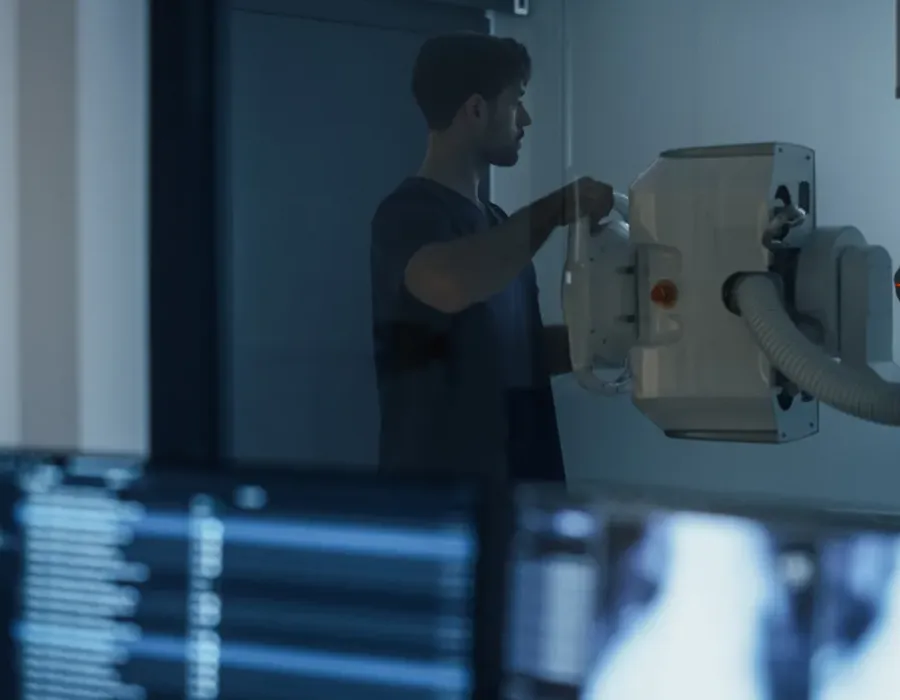
Rad Tech Specializations: CT, MRI, Mammography and More
Wondering what specializations are available in radiologic technology? Learn about the types of career pathways and discover what specialty could be right for you.

If you’re like many people considering a radiologic technology associate degree, you may not be aware of the wide number of specialties available in the field. Once you've earned the ARRT radiography credential, you can add specializations like computed tomography (CT), magnetic resonance imaging (MRI), and mammography. Each specialization can offer different equipment, work settings, and patient populations to support.
In this guide, we look at career opportunities after earning a radiologic technology associate degree by focusing on specializations. You can learn more about credentials you can add, how each specialization pathway works , and how to decide which direction fits you. If you're still choosing a program, it's also a useful way to see where our Associate of Science in Radiologic Technology can take you.
Rad tech specializations at a glance
Most specializations follow the same basic sequence: you earn your associate degree, pass the ARRT radiography exam, and then add a specialty credential on top of it. What changes from one specialty to the next is the type of imaging you perform, the patients you work with, and where you're likely to work.
The table below compares the most common specialization options side by side.
| Modality | Credential added | Typical path after the associate degree | Common settings |
|---|---|---|---|
| Computed tomography (CT) | ARRT CT R.T.(R)(CT) | Earn ARRT radiography credential, then complete structured education and clinical requirements through the postprimary pathway | Hospitals, outpatient imaging centers, physicians' offices, cancer centers |
| Magnetic resonance imaging (MRI) | ARRT MRI R.T.(R)(MR) | Postprimary pathway after radiography; a separate primary pathway also exists for those who start in MRI | Hospitals, physicians' offices, outpatient imaging centers, cancer centers, mobile units |
| Mammography | ARRT Mammography R.T.(R)(M) | Earn ARRT radiography credential, then complete structured education and clinical requirements through the postprimary pathway | Breast and women’s health centers, hospitals, mobile units, outpatient imaging centers |
| Bone densitometry | ARRT Bone Densitometry R.T.(R)(BD) | Postprimary pathway after radiography | Breast and women’s health centers, outpatient imaging centers, physicians' offices |
| Vascular interventional radiography (VIR) | ARRT VIR R.T.(R)(VI) | Postprimary pathway after radiography | Hospital interventional suites, surgical centers |
| Cardiac interventional radiography (CIR) | ARRT CIR R.T.(R)(CI) | Postprimary pathway after radiography | Hospital cardiac catheterization labs, surgical centers |
| Breast sonography | ARRT Breast Sonography R.T.(R)(BS) | Postprimary pathway after radiography | Breast and women’s health centers, hospital imaging departments, cancer centers, outpatient imaging centers |
| Vascular sonography | ARRT Vascular Sonography R.T.(R)(VS) | Postprimary pathway after radiography; a separate primary pathway also exists | Hospital vascular labs and/or imaging department, outpatient imaging centers, surgical centers, mobile units |
Pathway information is based on information from the American Registry of Radiologic Technologists (ARRT). Requirements vary by discipline and are updated periodically, so check ARRT's current requirements before you begin.
How adding a specialization works after your associate degree
For most specializations, you don't need another degree. Instead, you'll use ARRT's postprimary pathway, which is designed for technologists who already hold a primary credential such as radiography. Here's how the process typically works.
Step 1: Earn your associate degree and radiography credential
The foundation of any radiologic technology career is an associate degree or higher from an ARRT-approved radiography program. Herzing's Associate of Science in Radiologic Technology is ARRT approved, includes 76 credits of coursework, and takes an average of 24 months to complete. General education courses are online, while radiologic technology courses and labs take place on campus. You'll also complete 800+ clinical contact hours.
The curriculum is designed to prepare you for the ARRT radiography exam. You can become eligible to take the ARRT exam after successfully earning your degree.
Step 2: Meet the postprimary requirements
Once you're certified and registered in radiography, each specialization has its own set of requirements. In general, they include:
- A supporting credential. For most rad techs, this is your ARRT credential. In some cases, credentials from the Nuclear Medicine Technology Certification Board (NMTCB) or American Registry for Diagnostic Medical Sonography (ARDMS) may also qualify.
- Structured education. Coursework specific to the specialty, covering topics like anatomy, patient care and imaging procedures for that modality.
- Clinical experience. A set of procedures you perform and document, which are then verified by a qualified supervisor.
You'll also need to meet ARRT's ethics requirements, just as you did for your primary credential.
Step 3: Pass the ARRT exam for your specialty
After your education and clinical experience are complete, you'll take the ARRT certification exam for that discipline. Once you pass, the new credential is added to your existing one.
To maintain both of your credentials, you’ll need to keep up with ARRT's annual continuing education and renewal requirements. According to ARRT, you’ll need to renew your credentials every year and report continuing education activities every other year. As of 2026, you pay one $65 renewal fee each year no matter how many credentials you hold.
Can you add a specialization while you work?
In many cases, yes. Because the postprimary pathway doesn't require an additional degree, many technologists complete structured education while working as radiographers and build clinical experience in their current role.
Some employers may offer cross-training in modalities. Training availability varies by employer and location.
CT, MRI and mammography compared
CT, MRI and mammography are three of the most common directions rad techs explore.
Computed tomography (CT)
CT technologists use X-ray technology to capture images from multiple angles. These images are combined into detailed cross-sectional views of the body. The work often involves administering contrast agents to the patient before imaging begins. These agents help enhance specific structures in the body during the scans. CT techs must carefully balance image quality with radiation dose.
Because CT is frequently used in emergencies, it may suit you if you like a fast pace and staying calm under pressure. The CT credential is earned through the postprimary pathway.
Magnetic resonance imaging (MRI)
MRI technologists use magnetic fields and radio waves rather than ionizing radiation to produce images. Safety screening for metal and implants is a big part of the job: allowing metal near a strong magnetic field can cause damage to the equipment or injuries to patients or techs. It’s also common for patients to feel anxious or claustrophobic in the scanner.
Given both these factors, MRI may suit you if you're detail-oriented and good at helping people feel at ease. MRI certification is available through either the postprimary or primary pathway.
Mammography
Mammographers perform screening and diagnostic breast imaging that supports the detection of breast cancer and other breast diseases. Precise positioning and compression are essential. Because the exam can feel very personal for patients, communication and compassion matter.
Mammography may suit you if you have an interest in women's health and enjoy building rapport with patients. It’s another credential that is earned through the postprimary pathway.
Other specializations to consider
Beyond CT, MRI and mammography, ARRT offers several other postprimary credentials for radiographers. Bone densitometry focuses on bone density scans (DXA) used to assess conditions like osteoporosis. Cardiac interventional radiography (CIR) and vascular interventional radiography (VIR) involve real-time imaging that guides physicians during catheter-based procedures. Breast sonography and vascular sonography use ultrasound to image the breast and the blood vessels.
Other imaging specialties are primary disciplines within the ARRT framework, which generally means you need to complete additional college coursework to become eligible to take the certification exams for them. Primary disciplines include nuclear medicine technology, radiation therapy and general sonography. To learn more about how the radiography path fits into the bigger picture, read our guide on how to become a radiologic technologist.
How to choose your specialization
Many technologists add more than one credential over their careers, so there’s no single right answer. These questions can help you narrow it down:
- What kind of patient interaction do you prefer? Mammography and MRI often involve more one-on-one reassurance, while CT can mean a higher volume of shorter exams.
- What kind of schedule and pace fits you? Hospital roles may include evening, weekend and overnight shifts, while outpatient centers and physicians' offices may offer more predictable hours.
- Would you prefer to work without ionizing radiation? MRI and sonography don't use it, which some technologists find appealing.
- What did your clinical rotations show you? Pay attention to the modalities and departments that held your interest during your program.
- What do employers near you need? Talk with supervisors and technologists in your area about which specialties are in demand and whether cross-training is offered.
Frequently asked questions
Yes. Once you're certified and registered in radiography, you can complete the structured education, clinical experience, and exam for either the CT or MRI specialization through ARRT’s postprimary pathway.
It depends on how long it takes you to complete the structured education and document the required clinical procedures, which can vary based on your job and access to the equipment. Check ARRT's current requirements for the specialty you're considering, since they're updated periodically.
Consider the type of patient interaction you want, the pace and schedule that fits your life and the clinical experience available where you work. Many technologists start with a modality their employer can help them train in, then add others over time.
No. Mammography is a postprimary credential. ARRT's degree requirement applies to the primary pathway, not the postprimary one. You'll need your radiography credential plus the mammography education, clinical and exam requirements. Some employers or states may have additional requirements.
The Associate of Science in Radiologic Technology requires 76 credits of coursework, which takes an average of 24 months to complete. You may be able to transfer up to 57 approved credits. The program is offered on campus in Clarksville, Dallas, Orlando and Tampa, with general education courses online.
Start with your radiologic technology associate degree
Every specialization in this guide begins with a strong foundation in radiography. Herzing University's Associate of Science in Radiologic Technology is offered on campus in Clarksville, Dallas, Orlando, and Tampa, with general education courses online. You'll learn from experienced, credentialed faculty and have access to personalized student services, including lifelong career coaching.
Comparing programs? Our tips for choosing a radiologic technology program can help you know what to look for. When you're ready, explore the radiologic technology program or get in touch to learn more.