
Latest
Tips for Choosing a Radiologic Technology Program
 Herzing Staff
 Oct 2, 2026
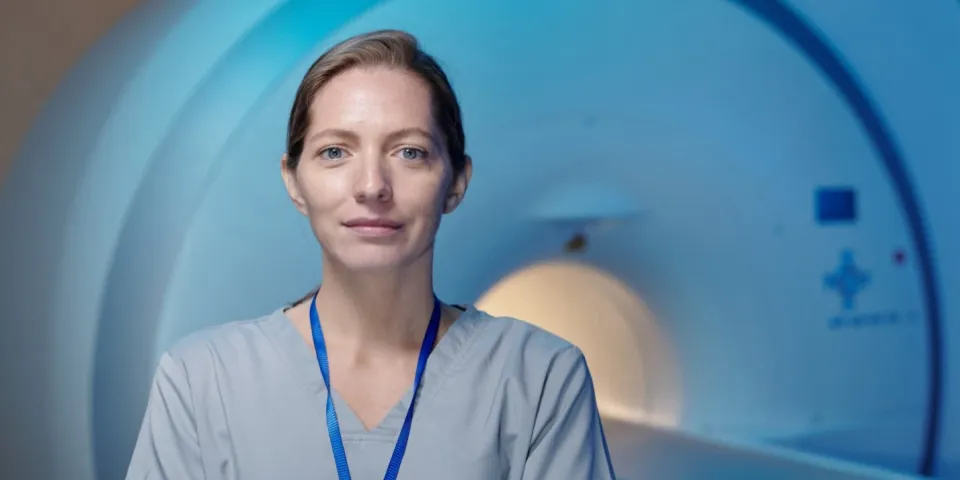
Are you interested in a career that combines technology and patient care? Radiologic technology—the allied health career that involves taking x-rays and other diagnostic images—could be right for you.
However, not all radiologic technology programs are built the same way. Two associate degree programs with similar classes and clinicals may still be very different in terms of how they handle certification preparation, scheduling, transfer credit and cost. Those differences matter, because the program you choose shapes how much of your life you need to rearrange while you study, as well as how prepared you feel for the national registry exam after you finish.
At Herzing University, we designed our Associate of Science in Radiologic Technology to provide the clinical education and rigor the profession requires while staying manageable for students with jobs, families and responsibilities outside of class. Here are some important factors to consider when you compare rad tech degree programs.
Accreditation and Approval: ARRT-Recognition Comes First
Approval of the program by the American Registry of Radiologic Technologists (ARRT) is the first thing to check. The ARRT sets the eligibility rules for the credential that registers you as a Registered Technologist in Radiography, R.T.(R). To be eligible for the ARRT exam, you need to earn an associate degree and complete an ARRT-approved educational program. Upon graduation from our Radiologic Technology program, you'll be eligible to take the national registry exam offered by the ARRT and apply for state licensure as a radiographer.
Institutional accreditation, granted by an agency recognized by the U.S. Department of Education, is a requirement by the ARRT for the program to be recognized. Herzing University is accredited by the Higher Learning Commission, an institutional accreditation agency recognized by the U.S. Department of Education. Accreditation is a voluntary process, but it can impact issues like credit transfer and financial aid eligibility.
ARRT-recognition is about your career options.
So, ask any program you're considering to tell you plainly which accreditor recognizes the institution, and whether the program appears on ARRT's recognized list. As our guide on how to become a radiologic technologist explains, state license requirements vary from state to state.
Your first ARRT credential matters for another reason. ARRT's post primary pathway is open to technologists who are already certified and registered with ARRT and want to pursue an additional credential in an area such as computed tomography, magnetic resonance, mammography, bone densitometry, or interventional radiography. The credential you earn after your associate degree is what makes those later ones possible.
Curriculum and Clinicals
Once you’ve confirmed program recognition and institutional accreditation, look at what you'll study and where you'll practice it. A radiography curriculum should move you from foundational science into imaging-specific coursework, then into supervised work with real patients.
Herzing's Associate of Science in Radiologic Technology is a 76-credit program that takes 24 months on average. Coursework covers the principles of radiography, radiation production, radiographic procedures for the chest, abdomen, extremities, spine, skull and the gastrointestinal and urinary systems, along with radiologic pathology, cross-sectional anatomy, patient care, digital image production and fluoroscopic imaging.
Clinicals are where that knowledge becomes practice. Our program includes 700+ clinical contact hours across six clinical education courses, plus 150 contact hours in on-campus procedure labs. (The exact number of clinical hours depends on which state you study in.)
Each clinical course pairs supervised experience in real clinic and hospital settings with competency evaluation, so you build skills in a sequence rather than all at once. When you compare programs, ask how many clinical hours are required, how sites are assigned and how competencies are documented.
Certification Preparation
Ask how a program prepares you for the ARRT exam and when preparation starts. Herzing's curriculum is designed to prepare you for the national registry exam offered by the ARRT, with exam preparation built into the coursework and guided by the American Society of Radiologic Technologists’ published curriculum guidelines
Registry review, competency evaluations throughout your clinical rotations and instruction from experienced faculty all work toward the same finish line.
Convenient Schedule Options
Radiography is hands-on, so some of your time has to happen on campus and in clinical settings. General education coursework is more flexible. At Herzing, we offer general ed courses online, so you can spend less time on campus. This can make the pre-clinical phase of your program easier to fit around work and family.
The program is offered at our campuses in Clarksville, Tennessee, Dallas, Texas, Orlando, Florida and Tampa, Florida.
Transfer Credit Opportunities
If you've earned college credit before, find out how much of it could count before you apply to a radiological technology degree program. Transfer credit can reduce both the time and the cost of finishing your degree. Policies differ widely from school to school.
You can transfer up to 57 approved credits from prior college coursework into Herzing's AS in Radiologic Technology program. Approved military experience can translate into college credit as well. Our QuickPaths approach is built around this idea.
An admissions advisor can review your transcripts and tell you where you stand before you commit.
Financial Aid and Scholarship Opportunities
Cost is a major consideration for anyone pursuing a college education. Ask each program which federal, state and institutional options apply.
At Herzing, financial aid and scholarships are available for those who qualify. Federal options include grant and loan options for eligible students. State grants vary by campus.
Herzing’s institutional scholarships and grants are awarded based on academic achievement, financial need and other eligibility criteria. We awarded over $20 million in scholarships and grants to qualified students in 2025.
Military-connected students can look into VA and military education benefits, including Herzing Military Appreciation Grants that can help lower tuition and fees.
Campus Facilities and Support
Finally, look at the room where you'll practice and the people who'll help you through your studies. Ask to see the labs. Ask who you can call if a course is tough.
Herzing's Radiologic Technology program includes 150 contact hours of hands-on work in our on-campus procedure labs before and alongside your clinical rotations. Our labs use modern imaging technology, so you become familiar with equipment you’ll see on your clinical rotations—and on the job.
Every student is assigned an advisor who provides individualized support. They can connect you with resources like the Library and the Tutoring and Writing Center or help with requesting disability accommodations. Knack peer tutoring gives you 24/7, one-on-one tutoring in over 40 subjects at no additional cost.
Before and after graduation, you’ll also have access to support from our career services team.
Ready to Take the First Step?
When you're ready, explore Herzing's Radiologic Technology program or get in touch to talk through your options with an admissions advisor.
Frequently Asked Questions
No. ARRT determines its own eligibility criteria and accepts programs accredited by any agency on its recognized list, which includes the Higher Learning Commission. Confirm with the program which agency accredits it, then check that agency against ARRT's published list.
Herzing's Associate of Science in Radiologic Technology is 76 semester credit hours and takes 24 months on average for full-time students.
Ask for the number in contact hours rather than a general description. Herzing's program includes 700+ clinical contact hours across six clinical education courses, plus 150 lab contact hours on campus.
Yes. Once you're certified and registered with ARRT, post primary certification pathways let you pursue an additional credential in areas including computed tomography, magnetic resonance imaging, mammography, bone densitometry, cardiac or vascular interventional radiography, and more.
They may. You can transfer up to 57 approved credits from prior college coursework into Herzing's Radiologic Technology program. An admissions advisor can evaluate your transcripts before you enroll.
Learn about Herzing's radiologic technology program








Subscribe to our Newsletter
Get the latest news you need to know, from study hacks to interview tips to career advancement. Have it delivered right to your inbox biweekly.