
Latest
Honoring Service Through Social Work
 Herzing Staff
 Sep 15, 2026
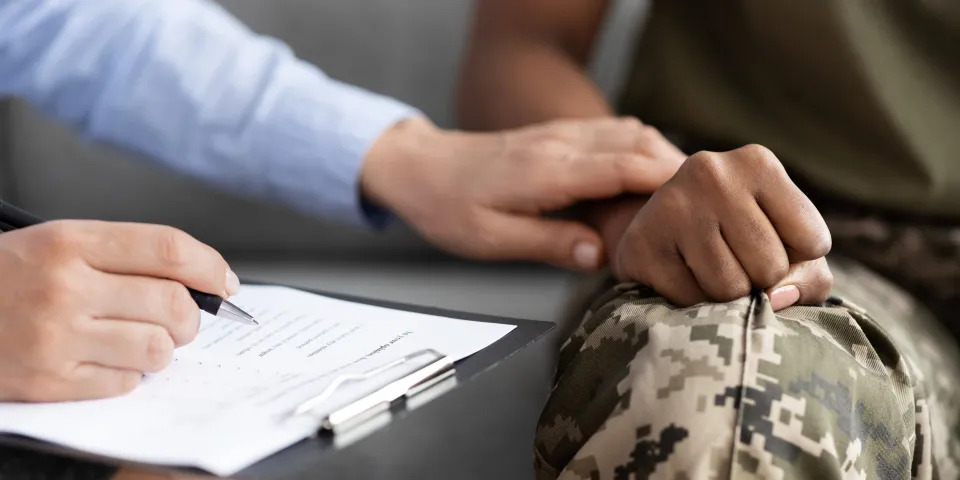
Social workers play an essential role in helping veterans and military families navigate the mental health challenges, benefits systems and transitions that come with military life. But some of the most effective social workers serving this population are veterans themselves, bringing an understanding of what it actually feels like to serve.
How do social workers support veterans and military families?
Social workers show up for veterans and military families in settings that range from military bases to private practices to veteran service organizations, meeting people where they are rather than asking them to come to a clinic. The National Association of Social Workers lays out detailed practice standards for this work, covering everything from combat related trauma to the quieter, ongoing stress military families carry through deployment and reintegration into civilian life. That guidance matters at scale: veterans make up about 7% of the U.S. population, spanning every era of service from World War II to today's active duty force, which means the need for professionals equipped to serve them never really goes away.
No single organization does more of this work than the U.S. Department of Veterans Affairs, which employs more than 18,000 social workers, the largest concentration of the profession anywhere in the country. Through its social work program, the VA offers:
- Suicide screening and crisis intervention
- Case management and discharge planning
- Assistance applying for VA, Social Security and other benefits
- Individual, group and family counseling
- Connection to housing, financial and community resources
Clinical social workers carry some of the heaviest responsibility within that system, treating conditions like post traumatic stress disorder, depression and substance use disorders. Herzing University's blog Advocating for Those Who Serve notes that an average of 1,487 clinical social workers supported the Department of Defense in 2020 alone, often serving as a service member's first point of contact for behavioral health concerns at specialized treatment centers, using evidence-based approaches like cognitive behavioral therapy.
Why are veterans uniquely equipped to serve their military peers?
Understanding military culture is one of the biggest challenges civilian social workers face when working with this population, and it's exactly where veterans have a head start. Someone who has lived through deployment, understood rank structure and felt the unique experience of coming home can build trust with a struggling service member faster than years of textbook study ever could.
That shared experience doesn't replace formal training, but it can shorten the distance between a clinician and a client who has spent years trained to keep struggles private. Herzing's own blog on the nine core competencies of social work practice breaks down exactly what that formal training covers, including ethical practice, cultural awareness, research informed care and effective intervention. Applied to military and veteran populations, that training means understanding the biopsychosocial issues common to this group: PTSD, traumatic brain injury, substance use and family strain, layered with fluency in the benefits systems the DoD and VA actually run on.
Where do military social workers work?
Military social workers practice in a range of settings:
- Military branches, on active duty or as civilian staff
- VA hospitals and outpatient clinics
- Veteran service organizations
- Private practices specializing in veteran care
- The U.S. Public Health Service Commissioned Corps
Wherever they land, the work looks similar in spirit: crisis intervention, trauma informed counseling, case management, advocacy and policy work, all aimed at the same goal of improving veterans' well-being over the course of their lives.
How can veterans start a career in social work?
Herzing's own history is inseparable from this mission. The university was founded in 1965 by Henry Herzing, a U.S. Navy veteran, and it has carried that legacy forward ever since. Herzing has earned recognition from U.S. News & World Report as one of the "Best Online Bachelor's Degree Programs for Veterans" and offers a dedicated Center of Excellence for Veteran Student Services, along with flexible scheduling and support navigating benefits like the Post-9/11 GI Bill and Yellow Ribbon Program.
Herzing also recognizes military training as prior learning credit, which can help veterans and active-duty students move through a BSW or MSW program more quickly. For veterans who already understand the weight of service, a career in social work offers a way to keep serving, just in a different uniform.
Learn More About Our Social Work Programs
* BLS pay estimates calculate the median annual wage for various occupations. Per the BLS the median wage for an occupation is: "The wage at which half of the workers in the occupation earned more than that amount, and half earned less. Median wage data are from the BLS Occupational Employment and Wage Statistics survey." Bureau of Labor Statistics (BLS), U.S. Department of Labor, Occupational Outlook Handbook 2025. BLS median wage estimates do not represent entry-level wages and/or salaries. Multiple factors, including prior experience, age, geographic market in which you want to work, and degree level and field, will affect career outcomes, including starting salary and earnings as an experienced employee. Herzing neither represents that its graduates will earn the median salaries calculated by BLS for a particular job nor guarantees that graduation from its program will result in a job, promotion, particular wage or salary, or other career growth.




Subscribe to our Newsletter
Get the latest news you need to know, from study hacks to interview tips to career advancement. Have it delivered right to your inbox biweekly.