
Latest
Can You Become a Radiologic Technologist Online? What to Know

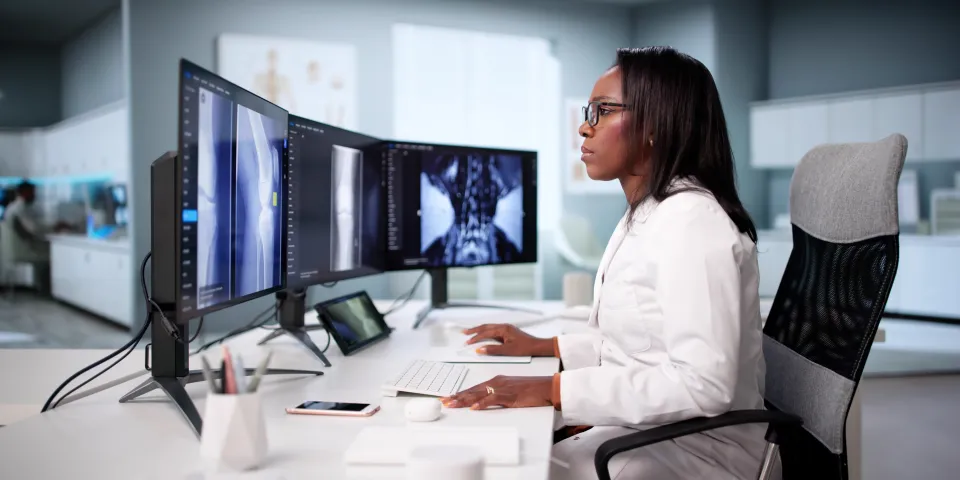
Do you have the option of becoming a radiologic technologist online? The short answer is no. Working with patients and operating complex imaging equipment is not something you can learn about through online content alone. To ensure that your skills meet clinical quality and patient safety standards, you’ll want to practice in hands-on labs and complete supervised clinical experience.
Hands-on training also matters for licensure and certification preparation. For example, most states that license radiologic technologists require graduation from a program with hands-on clinical experience as part of their licensure requirements. Also, students who want to become eligible for initial certification from the American Registry of Radiologic Technologists (ARRT) need to complete in-person labs and clinicals.
That doesn’t mean there’s no scope for some online coursework during your rad tech studies, however. At Herzing, for example, our Radiologic Technology program allows you to take general education courses online while completing lab classes and your clinical experience in person. Here's how the online and in-person pieces of our program fit together.
What Parts of a Rad Tech Program Are Online vs. On Campus?
In most rad tech programs, you can complete coursework that doesn't require equipment or patients online, while labs and clinicals happen in person. Colleges and universities usually publish a breakdown of how many contact hours students spend in each of three learning activities: lectures, labs and clinicals. Our Radiologic Technology program includes 1,755 total contact hours, which are divided across each learning activity as shown here:
| Component | Where it happens | What it covers | Contact hours |
|---|---|---|---|
| Lecture coursework | Online (general education) and on campus | General education plus radiography theory, procedure overviews and principles of patient care | 795 |
| Hands-on labs | On campus | Practicing imaging skills with real equipment and patient manikins under instructor guidance | 150 |
| Clinical experience | Hospitals and clinics | Six supervised clinical courses in working healthcare facilities | 810 |
| Total hours | 1,755 |
Online: General Education Courses
The program includes 24 credits of general education coursework that you can complete online. These courses help you build communication, reasoning and science skills you'll use throughout your career:
- Communications: Nine credits
- Humanities: Three credits
- Social and behavioral science: Three credits
- Math: Three credits
- Science: Eight credits, including Anatomy and Physiology I and II
Anatomy and Physiology I and II require a grade of C (70%) or better, since a strong understanding of the human body is essential for positioning patients and producing quality images.
On Campus: Hands-On Labs
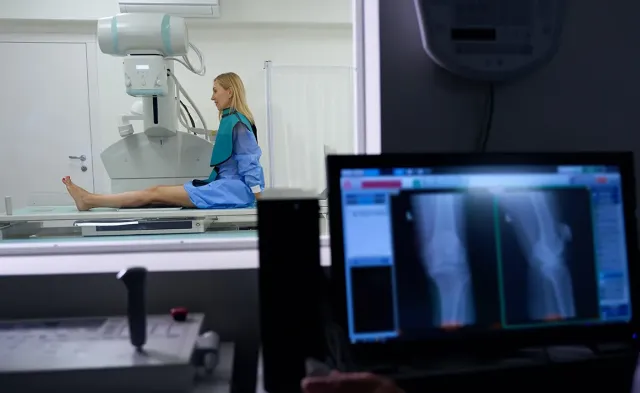
Live, hands-on labs on campus give you 150 hours to practice with imaging equipment in a supportive setting before you work with patients. Under the guidance of experienced instructors, you can build skills like patient positioning, equipment operation and radiation protection.
In Healthcare Settings: Supervised Clinicals
Clinical experience brings classroom and lab learning together. Herzing's program includes six clinical courses totaling 810 hours in real hospitals and clinics. In these courses, you'll work with patients under the supervision of certified, working radiologic technologists.
Clinicals are designed to help you apply your skills in a real-world healthcare environment so you can graduate prepared to take on the responsibilities of an entry-level radiologic technologist.
Why Rad Tech School Can't Be 100% Online
Radiologic technologists do hands-on work with patients and imaging equipment every day. You can read about positioning and radiation safety online, but performing an X-ray exam safely takes supervised repetition with real equipment and real people. Hands-on practice and training are a must in this field. If a program claims to be fully online with no clinical component, it's worth a closer look before you apply. Want to clear up other common myths about the field? Read our post on misconceptions about radiologic technology.
How Long Does a Radiologic Technology Associate Degree Take?
At Herzing, the Radiologic Technology associate degree takes an average of 24 months to complete with full-time enrollment. The program includes 76 semester credits of coursework and follows a set sequence, so your general education, labs and clinicals build on each other as you go.
- Cohort format: Students move through the program in a set sequence with a group, which helps keep your coursework, labs and clinicals on track.
- Start dates: New cohorts start every eight months.
- Transfer credits: You may be able to transfer up to 57 approved credits, which could reduce the general education courses you need to take.
For a deeper look at what affects your timeline, from clinical hours to certification steps, see how long rad tech school takes.
Herzing Rad Tech Campus Options
Herzing offers its radiologic technology program at four campuses in Florida, Texas and Tennessee. Each campus follows the same blend of online general education, on-campus labs and supervised clinicals.
| Campus | Degree | Address | Phone | Prepares you for |
|---|---|---|---|---|
| Orlando, FL | Associate of Science | 1865 SR 436 Winter Park, FL 32792 | (407) 641-5227 | ARRT exam and Florida licensure |
| Tampa, FL | Associate of Science | 3632 Queen Palm Drive Tampa, FL 33619 | (813) 285-5281 | ARRT exam and Florida licensure |
| Dallas, TX | Associate of Applied Science | 4851 Regent Blvd., Suite 100 Irving, TX 75063 | (945) 212-4900 | ARRT exam and Texas licensure |
| Clarksville, TN | Associate of Science | 2691 Trenton Rd. Clarksville, TN 37040 | (931) 771-8034 | ARRT exam and Tennessee licensure |
Note that licensure requirements vary by state. While some states, including Florida, Tennessee and Texas, all accept a pass on the ARRT exam as part of their licensure requirements, others may require a separate examination. Make sure you confirm the licensure requirements for your state before you enroll in a program.
What to Look for in a Rad Tech Program with Online Coursework
If you're comparing programs that offer some coursework online, these questions can help you find the right fit:
- How many clinical hours are included? Look for a program with substantial supervised clinical experience in real healthcare settings.
- Where do labs take place? Find out how often you'll need to be on campus and whether labs use current imaging equipment.
- Does the program prepare you for the ARRT exam? Check that graduates are eligible to sit for the exam and confirm that the program is recognized by the ARRT. You can check a school’s status by visiting the ARRT website and searching its list of recognized programs.
- When can you start? Ask about start dates, cohort schedules and whether there's a wait list.
- Which credits transfer? If you've taken college courses before, ask how they may apply to general education requirements.
For more guidance, read our tips for choosing a radiologic technology program.
After Graduation: ARRT Exam and State Licensure
Graduates of Herzing's radiologic technology program are eligible to take the ARRT national registry exam and apply for state licensure in Florida, Texas or Tennessee, depending on their campus. Earning these credentials is an important step toward working as a radiologic technologist.
Learn more about the path to this career in our guide to how to become a radiologic technologist.
Explore Radiologic Technology at Herzing
A career in radiologic technology starts with the right blend of online learning, hands-on practice and clinical experience. Explore our radiologic technology program or request info to talk with an admissions advisor about your next step.
Frequently Asked Questions
Clinical hour requirements will vary by program. Herzing's radiologic technology program includes 810 clinical hours across six clinical courses. These hours are completed in real hospitals and clinics under supervision.
Many programs accept transfer credits for general education courses. At Herzing, you may be able to transfer up to 57 approved credits. Visit our transfer students page to learn more.
The degree title can vary by state. At Herzing, the Orlando, Tampa and Clarksville campuses award an Associate of Science (AS) in Radiologic Technology, while the Dallas campus awards an Associate of Applied Science (AAS). Both are 76-credit programs that combine online general education, on-campus labs and supervised clinicals, and both prepare graduates to take the ARRT exam.
Yes. An associate degree is a common path to ARRT eligibility. Graduates of Herzing's radiologic technology program are eligible to take the ARRT national registry exam and apply for state licensure.
Explore Herzing's radiologic technology program






Subscribe to our Newsletter
Get the latest news you need to know, from study hacks to interview tips to career advancement. Have it delivered right to your inbox biweekly.