
Latest
Why is Nursing a Good Career? What You Can Expect
 Jessica Neddersen
 Mar 16, 2020
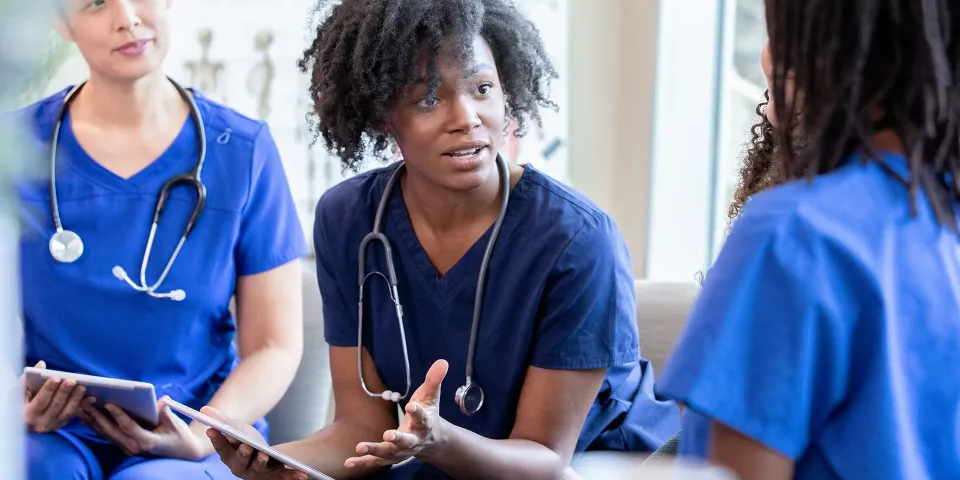
Nursing is both a calling and a career. Completing a nursing degree takes a lot of hard work, but it makes it possible for you to have a meaningful career in a field that you’re passionate about.
You might consider a career in nursing if you are looking for a fast-paced job, enjoy caring for people and want to make a positive impact on society. Here are six reasons why nursing is a sought-after career:
1. There's Increased Demand for Nurses
There is a projected 6% growth in nursing jobs from 2025-2035, higher than the average in other occupations, according to the Bureau of Labor Statistics.1 The BLS2 says a couple of reasons for the spike in demand is an increased emphasis on preventive medicine and assistance for chronic illnesses. Also, the baby boomer generation has a much longer life span which requires additional healthcare services, including long-term medical assistance. As the U.S. population continues to age, the demand for nurses is likely to continue on its upward trajectory.
2. There Are Several Job Opportunities
Nurses can work in a variety of healthcare settings, including hospitals, nursing homes, hospices, clinics and physicians’ offices. They also work in schools, at businesses and in the military.
Nurses can also select their specialty. For example, neonatal nurses take care of newborns while cardiovascular nurses assist patients who are suffering from chronic heart disease and/or have undergone heart surgery.
Nurses may have a flexible work schedule. Options range from a traditional 9 to 5 workday to a week with three 12-hour shifts.
3. You Can Choose from Several Specialties
There are multiple pathways available for nurses looking to pursue an advanced nursing degree. If you want to advance your career with your Master of Science in Nursing (MSN), you could earn a degree such as:
- Family Nurse Practitioner
- Adult Gerontology Acute Care Nurse Practitioner
- Adult Gerontology Primary Care Nurse Practitioner
- Psychiatric Mental Health Nurse Practitioner
- Nursing Education
- Nursing Leadership and Administration
- Public Health
- Women's Health Nurse Practitioner
4. You Enjoy Adapting and Innovating
There isn’t a “normal day” in nursing. Every day brings about challenges and changes, such as new treatment options. Patients do not respond to treatment in the same manner at the same rate. You will need to adapt your treatment style to match the patient’s needs and understand not everyone will heal in the same way. Additionally, nurses are involved in the forefront of healthcare innovations and digital workflows.
With emerging technologies coming into play in healthcare practices, nurses have an opportunity to practice and master technological services that improve patient treatment and overall healthcare services. This can include using electronic health records to access patient information, using mobile applications to perform virtual check-ins, and using portable monitors to track vital physiological signs in patients.
5. You Enjoy Flexible Work Schedules and Traveling
If you’re not a morning person or you don’t enjoy a 9 a.m. to 5 p.m. office job routine, then don’t worry! In nursing, you can choose a schedule that fits your lifestyle and preferences. Nurses work round-the-clock in hospitals, rehabs, assisted living facilities mental health facilities and nursing homes. As a nurse, you can work night shifts if you’re a night owl. You can work evening shifts if you’re neither a morning person nor a night owl. You can work 8-hr, 10-hr or 12-hr shifts. You can even work every weekend if you want to. You can work whatever shifts you want. The choice is yours.
Also, while not all nurses travel, that doesn’t mean that you are limited to work in a hospital or nursing home. If you love to travel then a job as a traveling nurse might just be a perfect fit. Nurses can travel all across America and work in a variety of different work environments. As an RN, there are many job openings for travel nurses.
6. Nurses Can Make a Real Difference
Unlike some jobs where you are in a cubicle all day, nurses get to work one-on-one with patients. Nurses make a big impact, whether by administering medicine or treatment, serving as a mediator between the doctor and the patient or offering support to a worried patient and their families. Nursing is one of the few careers in which you can see the impact that your career has on somebody’s life. An interaction with a nurse can be the biggest difference between a positive visit to the doctor or hospital or a negative visit.
Making a difference is also rewarding for you. According to the 2026 State of Nursing Survey, 68% of nurses are happy they joined this profession. As demanding as the career can be, few positions have an impact like nursing has on society.
Anna Armstrong, an oncology nurse and nursing instructor at Herzing’s Orlando campus, says that her patients have made an impact on her life, too.
“My patients embrace every single second they are gifted with. The irritations of everyday life do not bother them, and the truly important things in life take on increasing significance,” she says. “They have been able to share these life lessons with me and for that, I am grateful and humbled to be part of their care.”
What To Expect from a Nursing Profession
Not surprisingly, being a nurse comes with significant long-term benefits and challenges. No two days are the same, and your workflow can change regularly. So what exactly is in store for you if you go down the route of a nursing career? Here are three things to keep in mind:
1. Nursing School Can Be Challenging
Whether you’re starting out in a diploma program or pursuing your BSN, prepare to be challenged. There’s a lot to learn, but don’t let that discourage you. Your instructors and advisors want you to succeed, and they’ll be there to support you the whole way.
Staying organized and managing your time wisely will help you be successful. Many students balance full or part-time jobs in addition to earning their nursing degrees. Flexible course schedules and online learning make it easier for students with busy lives to find time for school.
“Never doubt that you can do it, because you can!” says Rashetta Tadesse, who graduated from Herzing University’s associate nursing program in 2018. “I worked a 40+ hour job and completed my nursing program. It will not be easy, but as long as you keep moving forward and take it day by day, you will be fine!”
2. Time Management and Communication Skills Are Crucial
Time management skills are essential to your success in school and become even more important once you start working. Great nurses are organized, show attention to detail and can adapt quickly to new situations.
Strong communication skills are also a must – nurses need to know how to communicate effectively with doctors and nurses and show empathy and understanding when dealing with patients.
“Exceptional nurses are active listeners,” says Robin Ihde, BSN-RN, an Injury Prevention and Outreach Coordinator for Froedtert Hospital in Wisconsin. “Nurses understand that everyone has their own set of values and life experiences to draw upon, and they try to see the situation from the patient’s perspective so that they can best meet the patient’s needs,” she says.
3. You Will Gain Experience in Various Specialties
As a nurse, you’ll have the opportunity to work in a variety of environments and specialties. From the ER to long-term care, the possibilities are endless, and it might seem overwhelming at first. With time and experience, however, you’ll find the right specialty for you.
“Eight years ago, if you had asked me which nursing specialty I was interested in, I would have been clueless,” says Herzing nursing student Zahra Mohammed. “Choosing your specialty involves a lot of trial and error and some time and patience.”
How Nurses Work with Patients and Doctors
Registered Nurses (RNs) serve patients and partner with doctors in several ways:
- Treat and assist in patient care alongside medical practitioners. Nurses are often responsible for administering patients’ medication and treatment. You’ll also help patients who are unable to assist themselves.
- Record treatment and monitor medical equipment. If a patient is receiving treatment, you are responsible for noting any changes in the patient and reporting this to the doctor. You’ll also need to keep tabs on the equipment that is monitoring the patient’s condition and possibly collaborate on a treatment plan with the doctor.
- Act as a liaison between the patient and the doctor. Nurses are often the main contact for patients during the recovery process, especially in nursing homes and assisted living facilities. Nurses will share information with others on their team and the doctor. Nurses also help explain doctors’ instructions to patients.
- Offer support to patients and their families. After the death of a loved one, a terrible accident or the diagnosis of a terminal illness, a patient and their family might look to you for support. They might look for you for answers about treatment and recovery, or just vent about their problems. As a nurse, it’s important to listen and be available to patients and their families.
A nursing career is a rewarding experience that requires patience, a commitment to learning, and a deep willingness to help others daily. If this sounds like something that appeals to you, then Herzing University is here to support you. Explore our various nursing programs and get started on a healthcare career.
Learn More About Our Nursing Programs
* BLS pay estimates calculate the median annual wage for various occupations. Per the BLS the median wage for an occupation is: "The wage at which half of the workers in the occupation earned more than that amount, and half earned less. Median wage data are from the BLS Occupational Employment and Wage Statistics survey." Bureau of Labor Statistics (BLS), U.S. Department of Labor, Occupational Outlook Handbook 2025. BLS median wage estimates do not represent entry-level wages and/or salaries. Multiple factors, including prior experience, age, geographic market in which you want to work, and degree level and field, will affect career outcomes, including starting salary and earnings as an experienced employee. Herzing neither represents that its graduates will earn the median salaries calculated by BLS for a particular job nor guarantees that graduation from its program will result in a job, promotion, particular wage or salary, or other career growth.





Subscribe to our Newsletter
Get the latest news you need to know, from study hacks to interview tips to career advancement. Have it delivered right to your inbox biweekly.